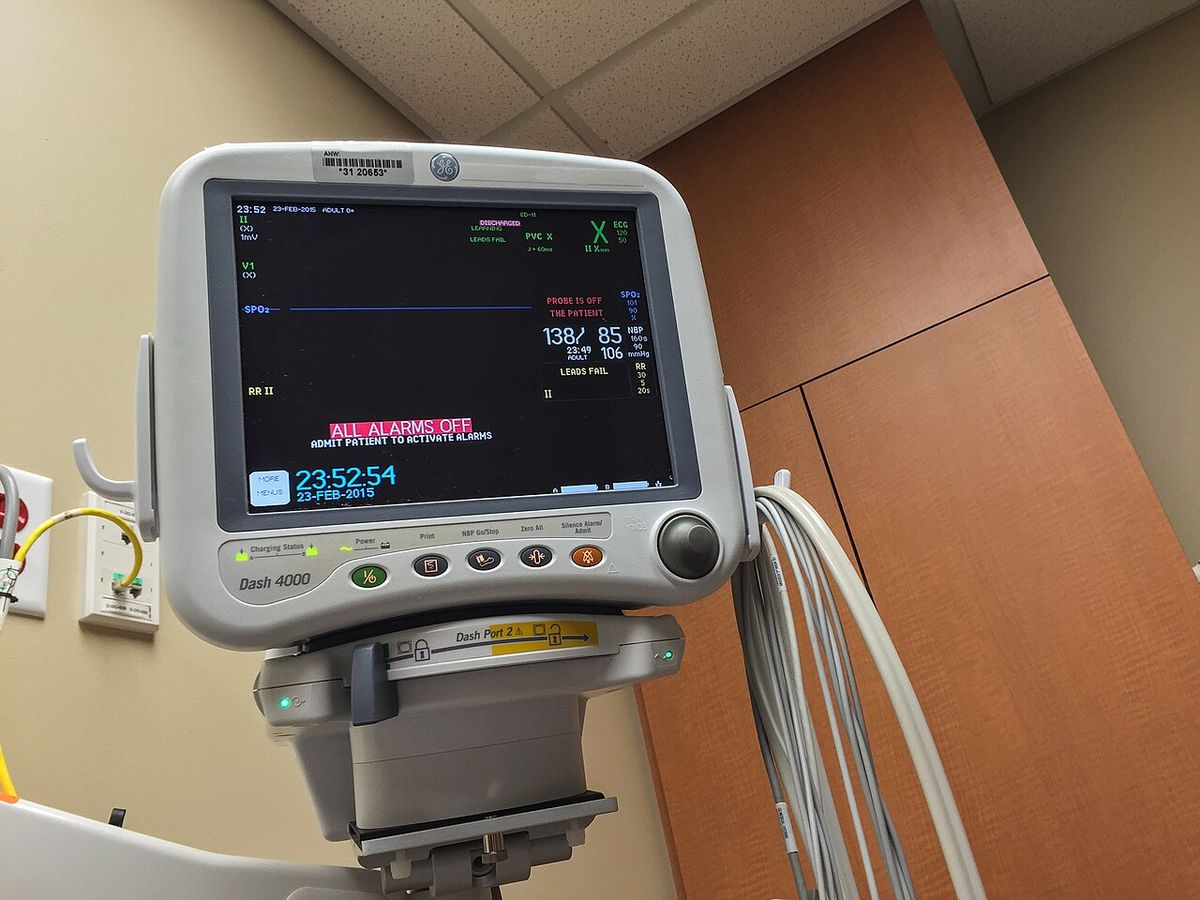
The Internet of Medical Things (IoMT) is the network of connected medical devices: infusion pumps, monitors, imaging machines, wearables, home blood pressure cuffs and implants that send data. They make care more efficient and allow monitoring at home. They also open new doors for cyber attacks.
Where IoMT is used
- Hospitals: connected pumps, monitors and beds.
- Homes: remote monitoring devices for blood pressure, glucose and heart rhythm.
- Implants: pacemakers and defibrillators that send data to clinics.
- Logistics: tracking equipment, drugs and cold chains.
In US Medicare, remote patient monitoring payments passed US$500 million in 2024, showing how fast home-connected care is growing [1].
The cyber threat
HHS reports that large breaches involving hacking rose 256% over five years, and ransomware rose 264% [2]. In 2023, hacking made up 79% of large breaches reported to HHS, and those breaches affected over 134 million people [2].
HHS's 2023 report to Congress says hacking was the most common type of breach, and the largest single hacking breach involved about 11.3 million people [3]. Not all breaches involve medical devices. But every connected device is a possible entry point.
New rules for device makers
Since 29 March 2023, US law (section 524B) requires makers of "cyber devices" to show in their submissions that the device and related systems are reasonably cybersecure [4]. This includes plans to monitor and fix vulnerabilities, and a list of software parts, known as a software bill of materials [4].
What hospitals can do
- Keep a full list of connected devices.
- Put medical devices on separate network segments.
- Change default passwords and limit remote access.
- Apply updates quickly, working with makers.
- Include cybersecurity in buying decisions.
- Plan and practise for system outages.
Patient safety
A cyber attack can do more than leak data. It can shut down systems, delay care and force ambulances to go elsewhere. Some devices, such as infusion pumps and pacemakers, directly affect treatment. Safety and security now go together.
Key numbers at a glance
- Hacking breaches up 256% in five years.
- Ransomware up 264%.
- Large breaches in 2023 affected over 134 million people.
- US device cybersecurity rule (524B) in force since 29 March 2023.
Questions to ask device makers
- How long will you provide security updates?
- Do you provide a software bill of materials?
- How will you tell us about new vulnerabilities?
- Can the device work safely if the network goes down?
Go deeper
Want the full picture? Our report covers market size, growth, segments, countries and the key companies. Read the report or get a free sample.
The 2023 breach report
HHS's annual report to Congress for 2023 says breaches reported to it affected about 113 million people, and hacking was the most common type [3]. HHS's own March 2024 statement counted over 134 million people affected by large breaches reported that year [2]. The figures differ because they were counted at different times and in different ways. Both show record levels.
Why devices are hard to secure
- Devices can stay in use for 10 years or more, longer than their software support.
- Some run old operating systems that can no longer be updated.
- Updates may need testing and approval before use.
- Hospitals may not know every device on their network.
- Devices are often bought by clinical teams, not IT teams.
Home devices
As more devices are used at home, security depends on home Wi-Fi, phones and apps. Patients need simple setup, automatic updates and clear advice. Makers should design devices to be secure by default.
Shared responsibility
Makers must design and maintain secure devices. Hospitals must manage networks and access. Regulators set rules. Patients and staff must follow safe habits. A weak point anywhere can put everyone at risk.
Questions for hospital leaders
- Do we know every connected device on our network?
- Which devices can no longer get security updates?
- How would we keep caring for patients if systems went down?
- Who is in charge of device security: IT, clinical engineering or both?
Key steps after an attack
- Isolate affected systems and devices.
- Switch to backup and paper processes for patient care.
- Tell regulators, partners and, where required, patients.
- Work with device makers to restore and patch devices.
- Review what happened and fix the gaps.
Practising these steps in advance shortens the time patients are affected.
Implants and life-critical devices
Pacemakers, insulin pumps and infusion pumps directly affect treatment. For these, makers must balance remote access, which helps doctors adjust settings, against the risk of misuse. Strong login controls, encrypted links and the ability to work safely offline are key design choices. Regulators review these choices before such devices reach patients.
What this means
Connected devices are making care more continuous and efficient. But each connection must be secured. Makers now face legal requirements, and hospitals are building cybersecurity into how they buy and run devices. Trust in connected care depends on getting this right.
Where to read more
All figures in this article come from public sources listed below. For more detail, start with the HHS Office for Civil Rights breach reports and the FDA's medical device cybersecurity pages. Each is free to read online. If anything here raises a question about your own health, take this article to your doctor or pharmacist and talk it through together.
Explore on Acuitas
- Internet Of Things In Healthcare market report – size, growth and key players
- Internet Of Things In Healthcare statistics – key numbers, trials and research in one place
- Top 10 fastest-growing Digital Health markets
- Global Arrhythmia Monitoring Devices Market Analysis – related market
- Global Artificial Intelligence (AI) in Healthcare Market Analysis – related market
- Global Artificial Intelligence (AI) in Remote Patient Monitoring Market Analysis – related market
- Get a free sample report or talk to our team
Topics: Digital health · Health IT and data · Remote monitoring and wearables
Sources
- HHS OIG data snapshot: Billing for remote patient monitoring in Medicare (2024 data)
- HHS Office for Civil Rights (Mar 2024): statement on large breaches and ransomware
- HHS: Annual report to Congress on breaches of unsecured protected health information, 2023
- US FDA: Cybersecurity resources for medical device manufacturers (section 524B)
Banner image: Hospital Patient Monitor (17239884329) by Tony Webster from San Francisco, California, CC BY 2.0, via Wikimedia Commons.
The data behind this story
Topics: Digital health · Health IT and data · Remote monitoring and wearables
Go deeper