Making a new medicine usually takes more than a decade and costs a great deal. Most candidate drugs fail along the way. AI promises to speed up the early steps: finding a target, designing a molecule and predicting how it will behave. The question is whether that turns into faster, cheaper approvals.
How AI is used in drug development
- Finding targets: searching genetic and protein data for the cause of a disease.
- Designing molecules: generating new chemical structures likely to hit the target.
- Predicting safety: flagging likely toxicity before lab tests.
- Planning trials: choosing sites, finding patients and predicting drop-out.
- Analysing data: reading images, lab results and records from trials.
- Manufacturing: monitoring quality on production lines.
The FDA says AI is used across the whole drug life cycle, from lab work to trials, safety monitoring after approval, and manufacturing [2].
What regulators are seeing
The FDA reports that the use of AI in drug development and submissions has grown sharply since 2016 [1]. When it issued its first guidance on AI in drug development in January 2025, the FDA said it had experience with more than 500 drug and biological product submissions with AI components since 2016 [1].
That guidance proposes a risk-based way to judge whether an AI model is credible for a specific use [1]. Sponsors would define the question the model answers, the context of use, the risk if the model is wrong, and how they tested it. The higher the risk, the more proof is needed.
The first AI-designed drugs in patients
A widely watched example is rentosertib, a drug for idiopathic pulmonary fibrosis, a serious lung scarring disease. Both its target and the molecule were found with generative AI. A phase 2a trial in 71 patients was published in Nature Medicine in June 2025 [3].
The main goal of the trial was safety. Side effects were reported at similar rates across groups [3]. Patients on the highest dose had a mean rise in lung function of 98.4 mL, while the placebo group declined by 20.3 mL [3]. These are small, early results. Larger trials are needed to prove benefit.
Can AI really cut years?
AI may shorten the early discovery stage, from target to candidate. But much of the time and cost of drug development is in clinical trials, which still need real patients and real results. A drug designed in months still has to pass phase 1, 2 and 3 trials. AI can help design better trials and find patients faster, but it cannot skip safety and efficacy testing.
Risks and limits
- AI is only as good as its training data, and much biology is still unknown.
- Models can be hard to explain, which matters when regulators ask why a decision was made.
- Promising computer results often fail in the lab or in people.
- Data privacy rules apply when patient data are used to train models.
Key numbers at a glance
- FDA has seen more than 500 drug and biologic submissions with AI components since 2016.
- FDA draft guidance on AI credibility: January 2025.
- Rentosertib phase 2a: 71 patients.
- Lung function: +98.4 mL vs −20.3 mL on placebo.
Questions investors and partners should ask
- Which step of development does the AI actually speed up?
- How many AI-designed candidates have reached human trials?
- How were the models validated?
- What happens if regulators question the model?
Go deeper
Want the full picture? Our report covers market size, growth, segments, countries and the key companies. Read the report or get a free sample.
Model credibility, in plain words
The FDA's draft guidance centres on "credibility": trust in how well an AI model performs for a particular use [1]. The FDA calls that use the "context of use", meaning the exact question the model is used to answer [1]. For example, a model that helps pick which molecules to make in the lab carries less risk than one used to decide which patients get a drug in a trial. The FDA encourages companies to talk to it early about how they plan to use AI [1].
The guidance drew on more than 800 public comments on FDA discussion papers about AI in drug development and manufacturing, and on a 2022 expert workshop [1].
Where the time goes in drug development
- Discovery: finding a target and a candidate molecule.
- Preclinical testing: lab and animal studies of safety.
- Phase 1: safety and dose in a small group.
- Phase 2: early signs of benefit in patients.
- Phase 3: large trials to prove benefit and safety.
- Review: regulators check all the evidence.
AI is strongest today in the first two steps. Later steps depend on how fast patients can be enrolled and followed.
What this means
AI is already part of how many drugs are found and developed. Its clearest gains are in the early, computer-heavy steps. Proof that it cuts total time and cost will come only when more AI-designed drugs finish late-stage trials and reach patients.
Where to read more
All figures in this article come from public sources listed below. For more detail, start with the FDA's January 2025 draft guidance on AI in drug development and the rentosertib trial in Nature Medicine. Each is free to read online.
Explore on Acuitas
- Artificial Intelligence (AI) in Drugs Discovery market report – size, growth and key players
- Artificial Intelligence (AI) in Drugs Discovery statistics – key numbers, trials and research in one place
- Top 10 fastest-growing Digital Health markets
- Global Apheresis Equipments Market Analysis – related market
- Global Artificial Intelligence (AI) in Healthcare Market Analysis – related market
- Global Artificial Intelligence (AI) in Life Sciences Market Analysis – related market
- Get a free sample report or talk to our team
Topics: Artificial intelligence · Clinical trials · Biologics and biosimilars
Sources
- US FDA (6 Jan 2025): FDA proposes framework to advance credibility of AI models used for drug and biological product submissions
- US FDA CDER: Artificial intelligence for drug development
- Xu Z et al. A generative AI-discovered TNIK inhibitor for idiopathic pulmonary fibrosis: a randomized phase 2a trial (Nature Medicine, 2025)
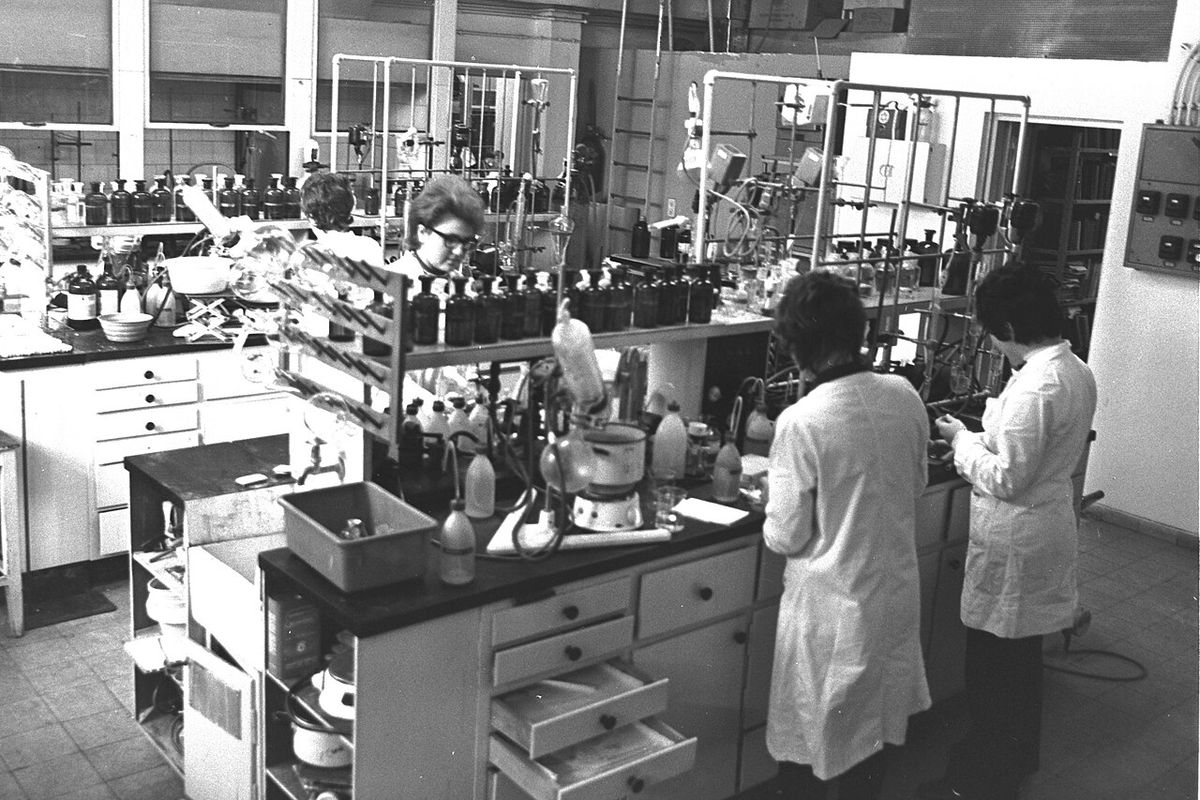
Banner image: D415-104 INTERIOR OF THE RESEARCH LABORATORY AT THE ABIC PHARMACEUTICS FACTORY IN RAMAT G… by MILNER MOSHE משה מילנר, Public domain, via Wikimedia Commons.
The data behind this story
Topics: Artificial intelligence · Clinical trials · Biologics and biosimilars
Go deeper