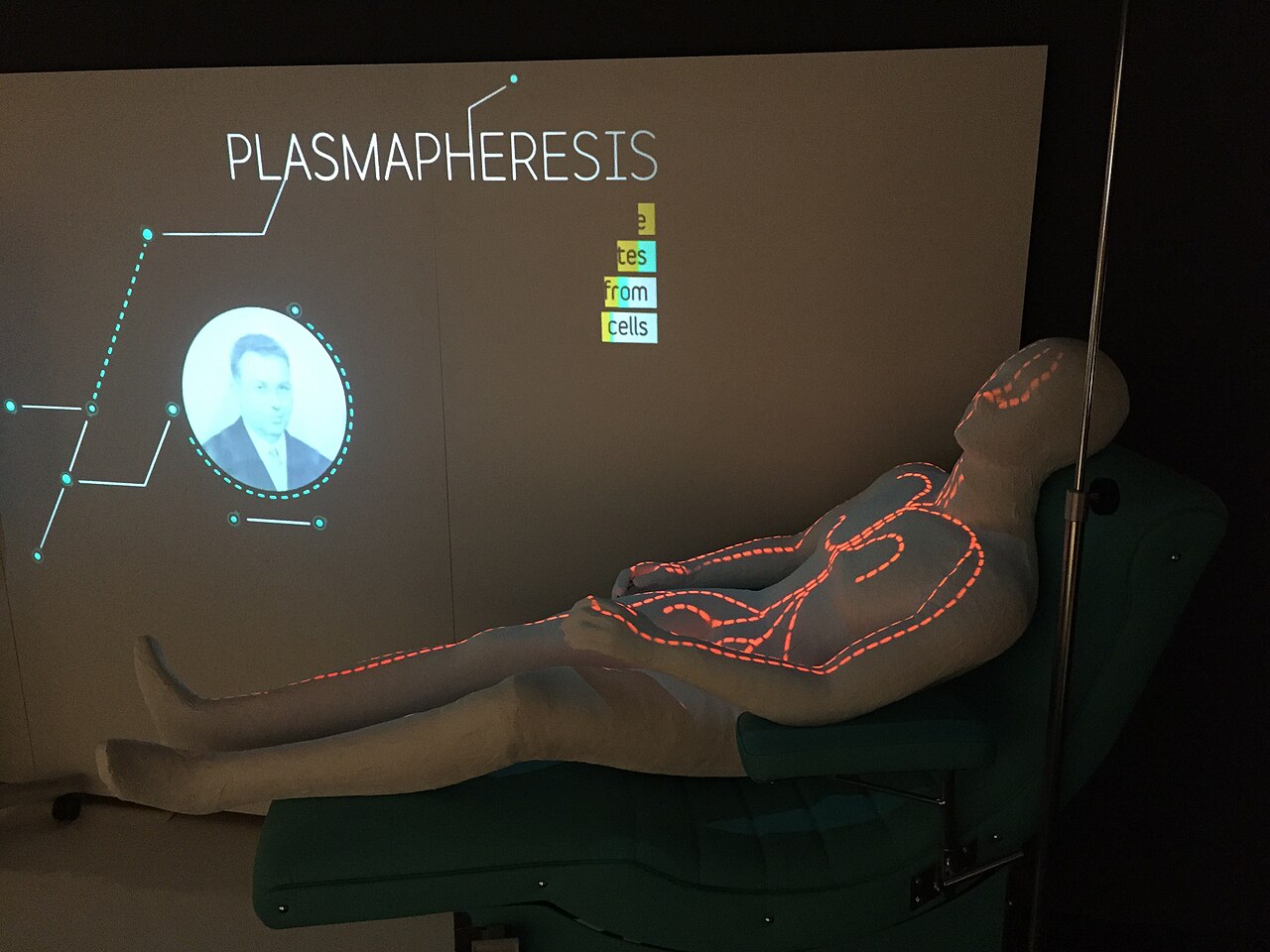
Apheresis is a process that takes blood from a donor or patient, separates it into parts in a machine, keeps the part that is needed, and returns the rest. It is used to collect plasma, platelets and stem cells, and to treat some diseases by removing harmful parts of a patient's blood.
Blood supply around the world
WHO reports about 120.4 million blood donations are collected worldwide. 36% are collected in high-income countries, which are home to just 15% of the world's people [1].
55 countries collect fewer than 10 donations per 1,000 people, all of them low- or middle-income [1].
Uses of apheresis
- Plateletpheresis: collects platelets for patients with cancer, bleeding or low platelet counts.
- Plasmapheresis: collects plasma for transfusion or to make medicines.
- Stem cell collection: for bone marrow transplants.
- Therapeutic plasma exchange: removes harmful antibodies from patients with some nerve, kidney and immune diseases.
- Cell collection for CAR-T therapy: gathers T cells to be engineered.
Plasma medicines
Plasma is used to make immunoglobulins and clotting factors that treat immune deficiencies and haemophilia. WHO reports that only 49 of 168 reporting countries produce plasma-derived medicines from their own plasma, while 119 countries import all of them or use none [1]. About 21.5 million litres of plasma were fractionated in the 36 countries that reported [1].
Components vs whole blood
Separating blood into components lets one donation help more than one patient [1]. Low-income countries separate 52% of collected blood into components, compared with 98% in high-income countries [1]. Apheresis adds to this by collecting large amounts of one component from a single donor.
Safety
WHO recommends that all donated blood is screened for HIV, hepatitis B, hepatitis C and syphilis [1]. It says regular, voluntary, unpaid donors are the safest [1]. 80 countries collect more than 90% of their blood from voluntary unpaid donors, but 59 still rely on family or paid donors for more than half [1].
For donors
- Apheresis donations take longer than whole blood, often 1–2 hours.
- Donors may feel tingling from the anticoagulant, which is easily managed.
- Platelet donors can give more often than whole blood donors.
- Donors must meet health and eligibility rules.
Key numbers at a glance
- 120.4 million blood donations a year.
- 36% collected in high-income countries with 15% of people.
- Only 49 of 168 countries make plasma medicines from local plasma.
- Low-income countries separate 52% of blood into components.
Go deeper
Want the full picture? Our report covers market size, growth, segments, countries and the key companies. Read the report or get a free sample.
Who receives blood
WHO says that in high-income countries, transfusion is most often used for heart surgery, transplant surgery, major trauma and cancer treatment [1]. In low- and middle-income countries, it is used more often for pregnancy complications and severe anaemia in children [1]. This means blood shortages in poorer countries hit mothers and young children hardest.
Quality systems
- 63% of blood screening labs worldwide took part in external quality checks, ranging from 92% in high-income to 48% in lower-middle-income countries [1].
- 52% of reporting countries have a haemovigilance system to track transfusion problems [1].
- Systems for reporting adverse transfusion events exist in 68% of hospitals that transfuse [1].
Apheresis programmes need the same quality systems: trained staff, validated machines and careful tracking of every product.
Women and young donors
WHO reports that globally 29% of donations come from women, but this ranges from 0.6% to 81% between countries [1]. More young people donate, proportionally, in low- and middle-income countries [1]. Recruiting and keeping a wide base of regular donors is key to a safe supply.
Therapeutic apheresis
For some patients, apheresis is a treatment. Therapeutic plasma exchange removes harmful antibodies or proteins from the blood. It is used for conditions such as Guillain-Barré syndrome, myasthenia gravis, some kidney diseases and thrombotic thrombocytopenic purpura. Specialist teams run these treatments in hospitals with apheresis units.
Plasma self-sufficiency
WHO urges countries to work towards self-sufficiency in blood and plasma products, based on voluntary unpaid donation [1]. Building plasma collection through apheresis, with local or regional fractionation, can make supplies of immunoglobulins and clotting factors more secure.
In short
Apheresis makes the most of every donor by collecting just what patients need. Strong donor programmes, quality systems and processing capacity are the foundations of a safe and steady blood supply.
What this means
Apheresis makes blood donation more efficient and supports cancer care, transplants and plasma medicines. Many countries still lack enough blood, components and local plasma production. Building voluntary donor programmes and processing capacity would help close these gaps.
Where to read more
All figures in this article come from public sources listed below. For more detail, start with the WHO fact sheet on blood safety and availability. Each is free to read online. If anything here raises a question about your own health, take this article to your doctor or pharmacist and talk it through together. Buyers, investors and policy makers can also use these sources to check claims in sales materials and compare options on the same public evidence. Where public sources disagree or update their figures, we note the year of each number so readers can see how the picture changes over time. Readers who spot an error or a newer source are welcome to contact our team. Reader questions help us choose which topics to cover in future articles and reports. You can also explore the related market reports, statistics pages and free public health charts linked in the Explore section above, which bring the latest public data on this topic together in one place for easy comparison.
Explore on Acuitas
- Apheresis Equipments market report – size, growth and key players
- Apheresis Equipments statistics – key numbers, trials and research in one place
- Top 10 fastest-growing Medical Devices markets
- Global Acute Care Needleless Connectors Market Analysis – related market
- Global Ambulatory Surgery Center Market Analysis – related market
- Global Anesthesia Monitoring Devices Market Analysis – related market
- Hospital beds – free chart in the Public Health Dashboard
- Early deaths from long-term diseases (WHO) – free chart in the Public Health Dashboard
- Get a free sample report or talk to our team
Sources
Banner image: Méshumans- Plasmapheresis 2 by Kippelboy, CC BY 4.0, via Wikimedia Commons.
The data behind this story
Go deeper