Breast cancer is the most common cancer among women worldwide. When it is found early and treated well, most women survive. When it is found late, the outlook is much worse. The difference often comes down to where a woman lives.
The scale of the problem
IARC estimates about 2.3 million new cases and about 670,000 deaths from breast cancer in 2022 [1][2]. In 2024 new cases rose to an estimated 2.43 million, making breast cancer the second most common cancer overall after lung cancer [1].
Why early diagnosis matters
WHO's Global Breast Cancer Initiative aims to cut breast cancer deaths by 2.5% a year, which would save an estimated 2.5 million lives by 2040 [3]. It rests on three pillars: health promotion for early detection, timely diagnosis, and complete treatment [3].
The tools
- Clinical breast examination and awareness, where mammography is not available.
- Mammography for screening, increasingly digital and 3D (tomosynthesis).
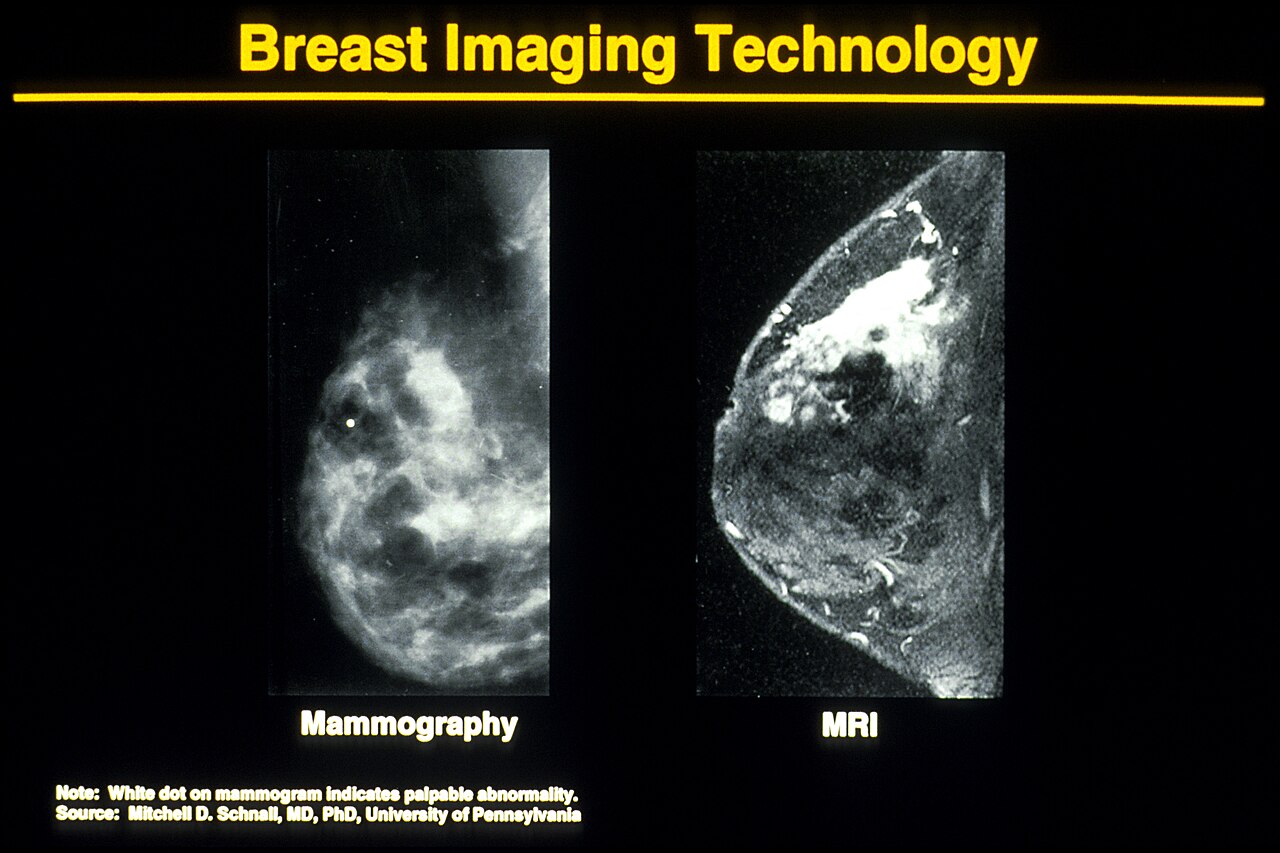
- Ultrasound and MRI for dense breasts and high-risk women.
- Biopsy and pathology, including biomarkers that guide treatment.
- AI support for reading mammograms, being tested in screening programmes.
Where the gaps are
Many low- and middle-income countries have few mammography units, few pathologists and long delays between a symptom and treatment. Women are more often diagnosed at a late stage [2].
Go deeper
Want the full picture? Our report covers market size, growth, segments, countries and the key companies. Read the report or get a free sample.
The 2024 figures
WHO reports that about 2.4 million women were diagnosed with breast cancer in 2024, and 694,000 died [2]. It was the most common cancer in women in 164 of 186 countries [2].
Who is at risk
About 99% of breast cancers occur in women, and 0.5–1% in men [2]. About 80% develop in women with no risk factor other than being female and over 40 [2]. Other factors include obesity, alcohol, family history, past radiation, reproductive history, tobacco and hormone therapy after menopause [2]. Most women diagnosed have no known family history [2]. Gene changes such as BRCA1, BRCA2 and PALB2 greatly raise risk [2].
This is why screening and awareness must reach all women, not only those with a family history.
Signs to check
- A lump or thickening, often painless [2].
- A change in breast size, shape or look [2].
- Dimpling, redness or pitting of the skin [2].
- Changes in the nipple or the skin around it [2].
- Unusual or bloody fluid from the nipple [2].
Most lumps are not cancer, but any lump should be checked [2]. Cancers found when small, before spreading to the lymph nodes, are more likely to be treated successfully [2].
Screening guidance
WHO lists mammography screening for women aged 50–69 in settings with strong or fairly strong health systems [5]. Screening is complex and needs equipment and trained staff [5]. Where screening is not yet possible, early diagnosis programmes, which teach women the signs and give fast access to tests, are essential [5].
Key numbers at a glance
- 2.4 million women diagnosed in 2024.
- 694,000 deaths in 2024.
- Most common cancer in women in 164 of 186 countries.
- About 80% occur in women with no risk factor besides sex and age.
Questions to ask your health worker
- How often should I be screened at my age?
- Does my family history change my screening plan?
- What happens if a scan shows something unusual?
- Should I consider genetic testing?
Where to read more
All figures in this article come from public sources listed below. For more detail, start with the WHO breast cancer fact sheet, the WHO Global Breast Cancer Initiative and the IARC Global Cancer Observatory. Each is free to read online.
WHO's Global Breast Cancer Initiative
WHO's Global Breast Cancer Initiative aims to cut breast cancer deaths by 2.5% a year, which would save about 2.5 million lives by 2040 [3]. It rests on three pillars [3]:
- Health promotion so women know the signs and seek care early.
- Timely diagnosis, with tests completed soon after a woman first seeks care.
- Complete treatment, including surgery, radiation, medicines and support to finish therapy.
How breast cancer grows
Breast cancer starts in the milk ducts or the milk-making lobules [2]. The earliest form, called in situ, is not life-threatening and can be found early [2]. Cancer that spreads into nearby tissue forms lumps. It can then spread to lymph nodes and other organs, which can be fatal [2]. The lymph nodes under the arm are often the first place it spreads [2].
Treatment
Treatment is based on the person, the cancer type and its spread. It combines surgery, radiation therapy and medicines [2]. WHO says breast cancer has a high chance of cure when found early and treated well [5]. Rehabilitation and palliative care are also part of good care [2].
Lowering risk
Many risk factors cannot be changed, such as sex and age [2]. Some can: keeping a healthy weight, limiting alcohol and not smoking [2]. Women found to carry high-risk gene changes, or who are at very high risk, may consider medicines to lower risk or surgery to remove both breasts [2]. These are big decisions that need specialist counselling.
Men get breast cancer too
About 0.5–1% of breast cancers occur in men [2]. The signs are the same: a lump, skin changes or nipple changes. Men often wait longer to get checked because they do not expect breast cancer. Any new lump in the chest should be looked at.
What this means
Closing the gap needs both awareness and a working pathway from first symptom to treatment. Low-cost imaging, portable ultrasound, faster pathology and AI reading support are the areas to watch.
Explore on Acuitas
- Breast Cancer Diagnostic market report – size, growth and key players
- Breast Cancer Diagnostic statistics – key numbers, trials and research in one place
- Top 10 fastest-growing Healthcare Services markets
- Global 3D Laparoscopy Imaging Systems Market Analysis – related market
- Global Angiography Devices Market Analysis – related market
- Global Artificial Intelligence (AI) in Medical Imaging Market Analysis – related market
- Early deaths from long-term diseases (WHO) – free chart in the Public Health Dashboard
- Clinical trials: Cancer – free chart in the Public Health Dashboard
- Get a free sample report or talk to our team
Topics: Oncology · Women's health · Imaging
Sources
- IARC: Breast cancer
- WHO fact sheet: Breast cancer
- WHO Global Breast Cancer Initiative
- WHO/IARC news (1 Feb 2024): Global cancer burden growing
- WHO fact sheet: Cancer
Banner image: Mammogram vs. MRI by Unknown authorUnknown author, Public domain, via Wikimedia Commons.
The data behind this story
Topics: Oncology · Women's health · Imaging
Go deeper