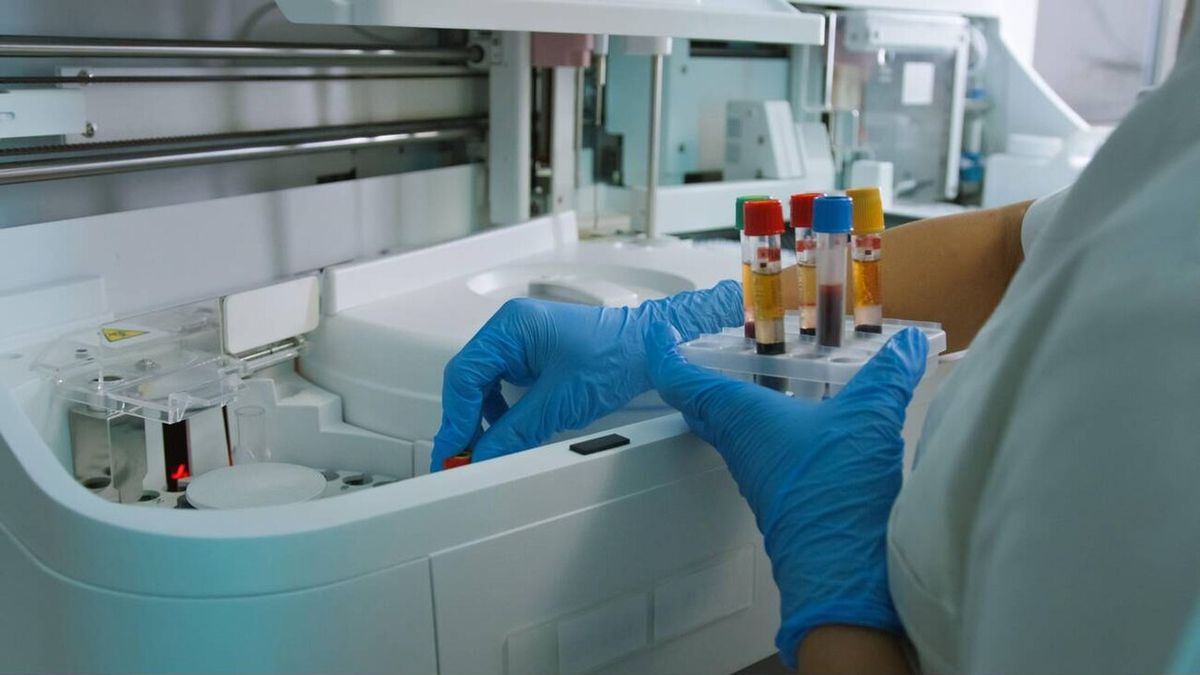
Most medical decisions depend on a test. Blood counts, blood sugar, kidney function, infection tests and tissue samples all pass through a laboratory. Yet labs are often invisible to patients and overlooked by planners.
The diagnostic gap
The Lancet Commission on diagnostics found that 47% of the world's population has little or no access to diagnostics [1]. That is about 3.6 billion people. The gap includes basic tests for diabetes, high blood pressure, HIV and TB, and tests for pregnant women such as hepatitis B and syphilis [2].
WHO adds that as many as 81% of basic primary care facilities in 14 low- and middle-income countries had no access to essential diagnostic tests, not counting HIV and malaria tests [3]. The Commission said that treating patients without tests is like "practising medicine blind" [2].
Role of labs
- Diagnosis: confirming or ruling out disease.
- Monitoring: tracking diabetes, kidney disease, HIV viral load or cancer markers.
- Screening: finding disease early, such as cervical cancer or newborn conditions.
- Public health: tracking outbreaks and drug resistance.
- Safe treatment: checking drug levels and choosing the right antibiotic.
Labs are key to fighting antibiotic resistance. WHO's global AMR plan lists stronger surveillance and lab networks as one of its six goals [4].
Lessons from COVID-19
The Commission noted that the pandemic showed how vital timely, accurate testing is [2]. High-income countries could scale up using public and private labs. Many low- and middle-income countries could not reach full testing capacity [2]. Some of that new capacity, such as molecular machines and trained staff, is now being used for other diseases.
Consolidation
In many countries, lab testing is moving to large central labs and lab chains. Big labs can run high volumes at lower cost per test. But samples must travel, so results take longer. Hospitals often keep a fast in-house lab for urgent tests and send routine work to central labs.
Automation and AI
Modern labs use robotic lines that sort, spin and test samples with little hand work. Digital pathology turns glass slides into images that can be shared and read remotely. AI tools are starting to help read slides and flag abnormal results. These raise output, but labs still need skilled scientists to check quality.
Quality matters
A wrong result can be worse than no result. Accreditation, regular quality checks and trained staff keep results reliable. The Commission called for diagnostics to be treated as central to health care, with funding, training and planning to match [1].
Key numbers at a glance
- 47% of people have little or no access to diagnostics.
- About 3.6 billion people affected.
- Up to 81% of primary care facilities in 14 countries lacked essential tests.
Go deeper
Want the full picture? Our report covers market size, growth, segments, countries and the key companies. Read the report or get a free sample.
What patients often do not see
A single blood sample can go through many steps: collection, labelling, transport, sorting, testing, checking and reporting. Errors can happen at any step. Most lab errors happen before the sample is tested, for example with the wrong tube, poor labelling or delays in transport. Good training at collection points is as important as good machines.
Labs and TB
TB shows how vital labs are. In 2024, 10.7 million people fell ill with TB and 1.23 million died [5]. WHO says diagnosing drug-resistant TB needs rapid molecular tests or culture [5]. Only about 2 in 5 people with drug-resistant TB got treatment in 2024 [5]. Better lab networks would find more of them.
Labs and antibiotic resistance
WHO reports that 1 in 6 lab-confirmed bacterial infections worldwide was resistant to antibiotics in 2023 [4]. In the WHO South-East Asia and Eastern Mediterranean regions, it was 1 in 3 [4]. Without labs that can grow bacteria and test which drugs work, doctors must guess. That drives more use of broad antibiotics, which feeds resistance.
Staff shortages
Many countries lack lab scientists and technicians. Automation helps, but trained people are still needed to run machines, check quality and interpret unusual results. Training programmes and clear career paths keep skilled staff in the field.
Questions to ask a lab partner
- Is the lab accredited, and for which tests?
- How fast are results for urgent and routine tests?
- How are results sent to doctors?
- How are samples transported and tracked?
- What quality checks are run each day?
Where to read more
All figures in this article come from public sources listed below. For more detail, start with the Lancet Commission on diagnostics and WHO's Global Diagnostics Coalition. Each is free to read online.
Sample transport
In rural areas, the hardest part of lab testing is often getting the sample to the lab and the result back. Motorbike couriers, scheduled pick-ups and even drones are used to move samples. Digital result systems send results by text message or app, so patients do not need a second trip. These links can matter as much as the machines.
What this means
Demand for lab testing will keep rising with ageing populations and chronic disease. The biggest need is in primary care in low- and middle-income countries. Networks that link small clinics to quality labs, with fast sample transport and digital results, can close much of the gap.
Explore on Acuitas
- Clinical Laboratory Service market report – size, growth and key players
- Clinical Laboratory Service statistics – key numbers, trials and research in one place
- Top 10 fastest-growing Healthcare Services markets
- Global Acute Care Needleless Connectors Market Analysis – related market
- Global Alzheimers Dignostic Market Analysis – related market
- Global Ambulatory Surgery Center Market Analysis – related market
- Hospital beds – free chart in the Public Health Dashboard
- Get a free sample report or talk to our team
Topics: Diagnostics and lab testing · Hospital
Sources
- Fleming KA et al. The Lancet Commission on diagnostics: transforming access to diagnostics (The Lancet, 2021)
- The Lancet press release (Oct 2021): Half of the global population lack access to basic diagnostics
- WHO: Global Diagnostics Coalition
- WHO fact sheet: Antimicrobial resistance
- WHO fact sheet: Tuberculosis
Banner image: NABL Accredited Clinical Pathology Laboratory in Kharghar Navi Mumbai Diagnostic Services by Goleisureintl, CC BY 4.0, via Wikimedia Commons.
The data behind this story
Topics: Diagnostics and lab testing · Hospital
Go deeper