Diabetes treatment used to focus only on blood sugar. Today doctors also look at heart, kidney and weight. Newer medicines can help with all three. But many people still get no treatment at all.
The size of the problem
WHO reports that people with diabetes rose from 200 million in 1990 to 830 million in 2022 [1]. The share of adults with diabetes doubled from 7% to 14% [1]. The IDF counts 589 million adults aged 20–79 in 2024, rising to 853 million by 2050 [2]. The two use different age groups and methods.
The treatment gap
In 2022, 59% of adults aged 30 and over with diabetes were not taking medicine for it [1]. Coverage was lowest in low- and middle-income countries [1]. Diabetes and diabetic kidney disease caused about 2.4 million deaths in 2023 [1].
The main medicines
- Insulin: needed every day by people with type 1 diabetes [1].
- Metformin: a low-cost first choice for many with type 2 diabetes [1].
- Sulfonylureas: older, cheap pills [1].
- SGLT-2 inhibitors: lower sugar and also protect the heart and kidneys [1].
- GLP-1 medicines: lower sugar and weight. WHO issued a guideline on GLP-1s for obesity in December 2025 [3].
People with diabetes often also need blood pressure medicines and statins [1].
Go deeper
Want the full picture? Our report covers market size, growth, segments, countries and the key companies. Read the report or get a free sample.
Deaths from diabetes
Diabetes directly caused 2.0 million deaths in 2023. 44% of these were in people under 70 [1]. Another 390,000 kidney deaths were caused by diabetes, and high blood sugar causes about 10% of heart and blood vessel deaths [1]. Since 2000, death rates from diabetes have been rising [1].
Type 1 and type 2
About 9.5 million people had type 1 diabetes in 2025, with more than 500,000 new cases. Most live in high-income countries [1]. People with type 1 need insulin every day to survive [1]. Its cause is not known, and it cannot yet be prevented [1].
More than 95% of people with diabetes have type 2 [1]. It is often preventable and is now seen more often in children [1]. Symptoms can be mild for years, so it is often found late, after damage has started [1].
Complications drive costs
Diabetes can damage the eyes, kidneys, nerves, heart and feet. It can lead to blindness, kidney failure, heart attack, stroke and amputation [1]. Care includes foot checks, kidney screening and eye exams [1]. Medicines that protect the heart and kidneys can lower these costly problems.
Preventing type 2 diabetes
- Reach and keep a healthy weight [1].
- Do at least 150 minutes of moderate exercise each week [1].
- Eat a healthy diet, with less sugar and saturated fat [1].
- Do not smoke [1].
Global targets
In 2021, WHO launched the Global Diabetes Compact to improve prevention and care, with a focus on low- and middle-income countries [1]. In 2022, the World Health Assembly agreed five global diabetes coverage targets for 2030 [1]. Getting diagnosed people onto treatment, and keeping blood sugar and blood pressure in control, are at the core of these targets.
Insulin access
Insulin was discovered more than a century ago, yet many people still struggle to get it. Steady supply, fair prices and cold storage all matter. Newer insulins and devices help, but cheap, reliable human insulin remains vital in many countries.
How diabetes is found
Symptoms can include strong thirst, passing urine often, blurred vision, tiredness and weight loss without trying [1]. In type 2 diabetes, symptoms can be mild for years [1]. WHO says early diagnosis can be done with low-cost blood sugar tests [1]. Regular check-ups are the best way to find type 2 diabetes early [1].
Pregnancy and pre-diabetes
Gestational diabetes is high blood sugar during pregnancy. It raises the risk of problems at birth, and of type 2 diabetes later for mother and child [1]. It is found through prenatal screening [1]. Impaired glucose tolerance, often called pre-diabetes, puts people at high risk of type 2 diabetes. But it does not always lead there [1]. Lifestyle changes at this stage can prevent or delay diabetes [1].
Two ways of counting
WHO and the International Diabetes Federation give different totals. WHO counts adults aged 18 and over: 830 million in 2022 [1]. IDF counts adults aged 20–79: 589 million in 2024 [2]. Both agree that numbers are rising fast and that many people are not treated. IDF also reports that more than 4 in 10 adults with diabetes do not know they have it [2].
Diabetes and weight loss medicines
GLP-1 medicines were first used for diabetes. They are now also used for obesity [3]. WHO's December 2025 guideline supports their use for obesity as one part of long-term care, with diet, activity and support [3].
What to expect at a check-up
- A blood sugar test, such as HbA1c.
- Blood pressure and cholesterol checks [1].
- Kidney tests and an eye exam [1].
- A foot check for ulcers and loss of feeling [1].
Key numbers at a glance
- 830 million people lived with diabetes in 2022 (WHO).
- 589 million adults aged 20–79 in 2024 (IDF), rising to 853 million by 2050.
- 59% of adults 30+ with diabetes took no diabetes medicine in 2022.
- About 2.4 million deaths from diabetes and diabetic kidney disease in 2023.
- About 9.5 million people had type 1 diabetes in 2025.
The gap between those who need treatment and those who get it is still very wide.
Where to read more
All figures in this article come from public sources listed below. For more detail, start with the WHO diabetes fact sheet and the IDF Diabetes Atlas, which gives country estimates for adults aged 20–79. Each is free to read online.
What this means
Newer drugs are changing care, but price limits their reach. Cheap generics, steady insulin supply and better screening will matter most where treatment coverage is lowest.
Explore on Acuitas
- Diabetes Management market report – size, growth and key players
- Diabetes Management statistics – key numbers, trials and research in one place
- Top 10 fastest-growing Pharmaceuticals markets
- Global Diabetes Care Devices Market Analysis – related market
- Global Diabetic Retinopathy Drugs Market Analysis – related market
- Global Digital diabetes care Market Analysis – related market
- Diabetes (ages 20–79) – free chart in the Public Health Dashboard
- Diabetes (adults, WHO) – free chart in the Public Health Dashboard
- Get a free sample report or talk to our team
Sources
- WHO fact sheet: Diabetes
- International Diabetes Federation: IDF Diabetes Atlas, 11th edition (2025)
- WHO fact sheet: Obesity and overweight (GLP-1 guideline, December 2025)
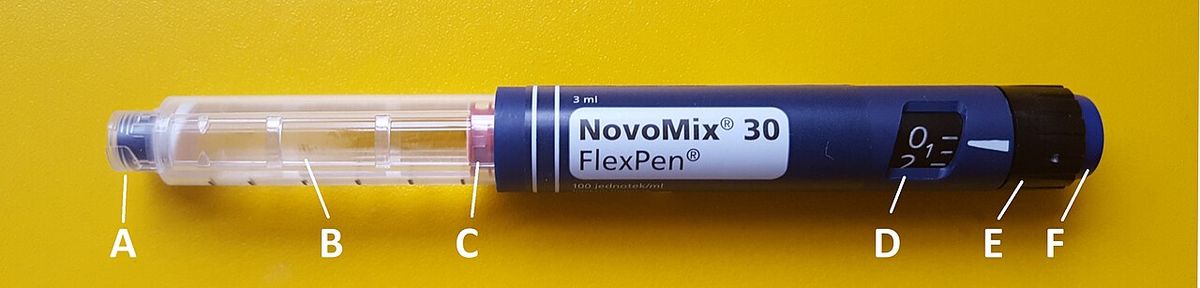
Banner image: Insulin pen (labeled) by User:Wesalius, labeled by User:Berchanhimez, CC BY 4.0, via Wikimedia Commons.
The data behind this story
Go deeper