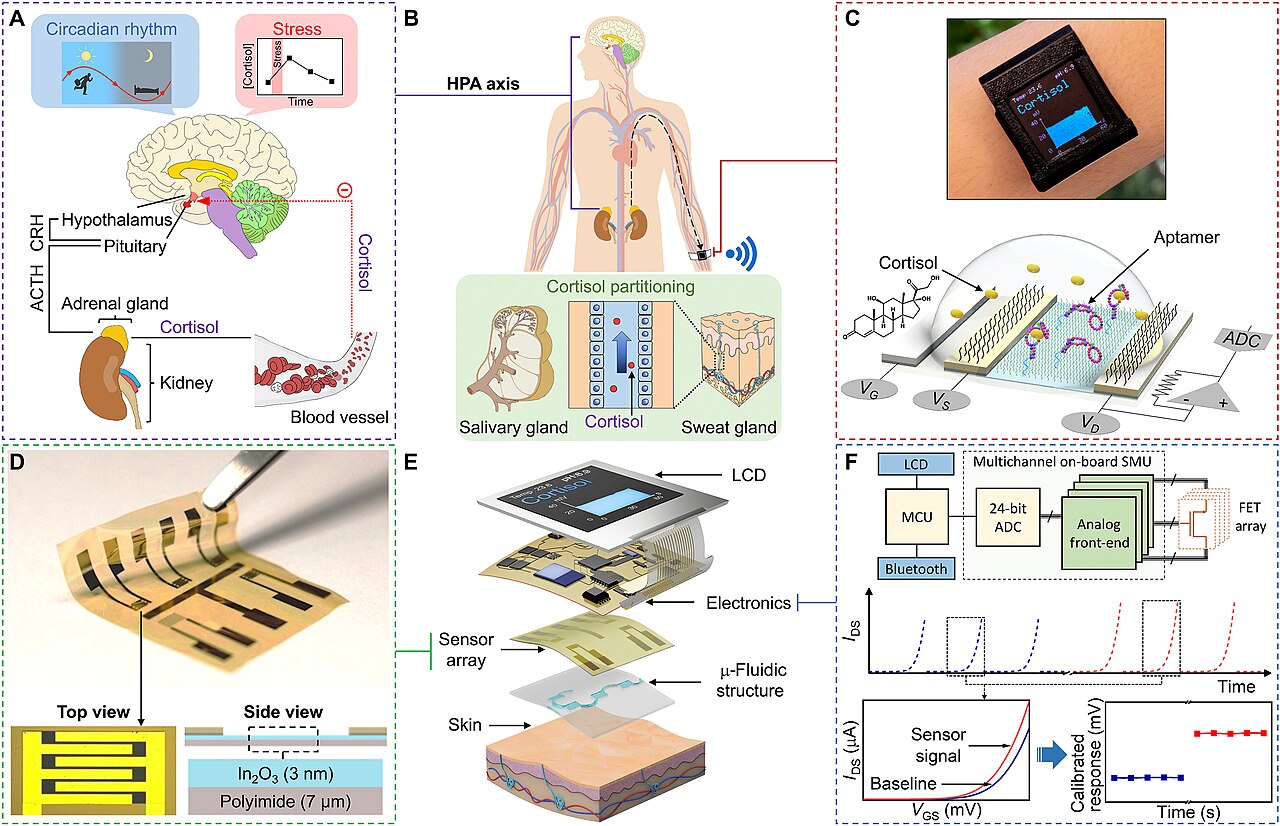
A biomarker is a measurable sign of health or disease, like blood pressure or blood sugar. A digital biomarker is measured by a digital device: a phone, watch, patch or sensor. Examples include walking speed, typing patterns, voice changes, sleep, heart rate variability and tremor.
Why they matter
Clinic visits give a snapshot. A person may feel better or worse on the day. Digital biomarkers can measure people continuously at home, in daily life. That can show small changes earlier and more reliably. It is especially useful for diseases that change slowly, such as Parkinson's disease, multiple sclerosis, heart failure and depression.
Uses today
- Clinical trials: measuring daily activity or walking as trial outcomes.
- Brain conditions: tracking tremor, gait and speech in Parkinson's disease.
- Heart conditions: heart rhythm and activity in heart failure.
- Mental health: sleep and movement patterns linked to mood.
- Respiratory: cough counts and breathing rate.
Regulators are setting rules
The FDA's December 2023 guidance on digital health technologies in clinical trials explains how to show a device is "fit for purpose" [1]. It covers checking that a device measures what it claims, that the measure matters to patients, and that data are reliable [1]. In September 2024, the FDA also finalised guidance on trials with decentralised elements, where some activities happen at home [2].
How many people carry the sensors
Digital biomarkers depend on devices people already own or will wear. About 36% of US adults used a wearable health device in 2022, up from about 30% in 2019 [3][4].
Challenges
- Validation: showing a digital measure truly tracks disease.
- Meaning: showing a change matters to patients, such as being able to walk to the shop.
- Device differences: the same measure may differ between brands.
- Missing data: people forget to wear or charge devices.
- Bias: devices may work less well for some skin tones, ages or body types.
- Privacy: continuous data reveal a lot about daily life.
Who is building them
Drug companies use digital biomarkers to make trials smaller, faster and more sensitive. Device makers and app developers want their measures accepted by regulators. Health systems are interested in using them to spot patients who are getting worse. Partnerships between these groups are common.
Key numbers at a glance
- US adults using wearables: about 36% (2022).
- FDA final guidance on digital health tools in trials: December 2023.
- FDA final guidance on decentralised trial elements: September 2024.
Go deeper
Want the full picture? Our report covers market size, growth, segments, countries and the key companies. Read the report or get a free sample.
Types of digital biomarkers
- Movement: steps, walking speed, balance and tremor.
- Heart: heart rate, heart rate variability and rhythm.
- Sleep: duration, timing and interruptions.
- Voice: changes in pitch, pace or clarity of speech.
- Phone use: typing speed and patterns of activity.
- Breathing: rate, cough and oxygen levels.
From sensor to evidence
The FDA guidance asks sponsors to show three things: that the device measures the physical signal correctly, that the measure tracks the health concept of interest, and that it is reliable in the people being studied [1]. Only then can a digital measure be used to support decisions about a medicine.
Patient voice
Patients help decide which measures matter. A small change in a lab value may mean little. Being able to walk further or sleep through the night can matter a great deal. Involving patients early helps choose digital measures that reflect real life.
Cost and access
Devices, data platforms and analysis cost money. Trials may supply devices to all participants so no one is left out because they cannot afford one. For use in routine care, payers will need evidence that digital biomarkers lead to better decisions.
Quick facts
- About 30% of US adults used wearables in 2019, and about 36% in 2022 [4][3].
- About 82% of users were willing to share data with providers in 2019 [4].
- FDA guidance on remote data in trials was finalised in December 2023 [1].
Questions for trial sponsors
- Does the digital measure reflect something patients care about?
- Has it been validated in people with this disease?
- How will missing data be handled?
- Will all participants be given the same device?
Clear answers to these questions make it more likely that regulators and doctors will trust the results.
Early days
Most digital biomarkers are still in research. A few are used as secondary trial outcomes. Few are yet used to make treatment decisions in routine care. The field is moving fast, but careful validation will set the pace. Companies that invest in strong evidence now will be ready when regulators and payers are.
What this means
Digital biomarkers could become everyday vital signs, alongside blood pressure and temperature. The first big uses will be in clinical trials, where regulators are already setting rules. Wider use in care will follow once measures are proven, trusted and paid for.
Where to read more
All figures in this article come from public sources listed below. For more detail, start with the FDA guidances on digital health technologies and decentralised trials. Each is free to read online. If anything here raises a question about your own health, take this article to your doctor or pharmacist and talk it through together. Good questions help.
Explore on Acuitas
- Digital Biomarkers market report – size, growth and key players
- Digital Biomarkers statistics – key numbers, trials and research in one place
- Top 10 fastest-growing Digital Health markets
- Global Alzheimer Drugs Market Analysis – related market
- Global Alzheimers Dignostic Market Analysis – related market
- Global Anti-Nerve Growth Factor Market Analysis – related market
- Get a free sample report or talk to our team
Topics: Digital health · Clinical trials · Brain and nerves
Sources
- US FDA guidance (Dec 2023): Digital health technologies for remote data acquisition in clinical investigations
- US FDA guidance (Sep 2024): Conducting clinical trials with decentralized elements
- Usage trends and data sharing practices of healthcare wearable devices among US adults (JMIR, 2025; HINTS 2022)
- Chandrasekaran R et al. Patterns of use and key predictors for the use of wearable health care devices by US adults (JMIR, 2020; HINTS 2019)
Banner image: Wireless and wearable aptamer-FET sensing system for on-body sweat analysis by Authors of the study: Bo Wang https://orcid.org/0000-0002-3…, CC BY 4.0, via Wikimedia Commons.
The data behind this story
Topics: Digital health · Clinical trials · Brain and nerves
Go deeper