An arrhythmia is an abnormal heart rhythm: too fast, too slow or irregular. Some are harmless. Others, like atrial fibrillation (AF), can lead to stroke, heart failure or sudden death. Many arrhythmias come and go, so they can be missed on a short ECG at a clinic. Rhythm monitors record the heart over days, weeks or years.
Why atrial fibrillation matters
People with AF have about a five-fold higher risk of stroke, and anticoagulant medicines lower that risk by about two-thirds [1]. WHO lists AF among heart conditions that raise stroke risk [2]. Stroke caused 11.9 million new cases in 2021, and 1 in 4 adults is expected to have a stroke in their lifetime [2].
Types of monitors
- Holter monitor: wires and a small recorder worn for 24–48 hours.
- Patch monitor: a sticky patch worn for up to two weeks, often wire-free.
- Event monitor: worn for weeks; records when symptoms happen.
- Mobile cardiac telemetry: sends data in near real time to a monitoring centre.
- Implantable loop recorder: a tiny device under the skin that records for years.
- Smartwatches: consumer devices that can flag irregular rhythms.
What smartwatches can do
The Apple Heart Study enrolled 419,297 people over 8 months [3]. Over a median of 117 days of monitoring, 0.52% received a notification of irregular pulse [3]. People notified were sent an ECG patch to confirm. The study showed that a watch can help find possible AF in the general population, but follow-up testing is needed to confirm the diagnosis.
Who should be monitored
- People with palpitations, fainting or unexplained dizziness.
- People who have had a stroke with no clear cause, to look for hidden AF.
- People with heart disease at risk of dangerous rhythms.
- People recovering from heart surgery or procedures.
Challenges
- Large amounts of data to review, often helped by AI software.
- False alarms from movement or poor contact.
- Deciding who should be treated when short episodes of AF are found.
- Making sure consumer alerts lead to proper medical care.
Prevention matters too
High blood pressure is the leading contributor to stroke [2]. About 1.4 billion adults have hypertension [4]. Controlling blood pressure, weight and alcohol helps prevent arrhythmias and strokes.
Key numbers at a glance
- AF raises stroke risk about five-fold.
- Anticoagulants lower that risk by about two-thirds.
- Apple Heart Study: 419,297 people; 0.52% notified.
- 11.9 million new strokes in 2021.
Go deeper
Want the full picture? Our report covers market size, growth, segments, countries and the key companies. Read the report or get a free sample.
After an alert
A smartwatch alert is not a diagnosis. In the Apple Heart Study, people who got a notification were offered a telehealth visit and an ECG patch to wear for up to a week [3]. Only an ECG reviewed by a clinician can confirm atrial fibrillation. People who get an alert should contact their doctor, not ignore it, and not start any medicine on their own.
Treating atrial fibrillation
- Stroke prevention: blood thinners for people at higher risk [1].
- Rate control: medicines to slow a fast heart rate.
- Rhythm control: medicines, electrical shocks or ablation to restore normal rhythm.
- Risk factor control: treating blood pressure, weight, sleep apnoea and alcohol use.
Implanted devices
Many pacemakers and defibrillators also record heart rhythm and send data to clinics remotely. This can catch problems early and reduce the need for clinic visits. Data must be reviewed regularly and stored securely.
Wearables and older adults
AF becomes more common with age, but older adults are less likely to own smartwatches. Programmes that give simple monitors to older people at higher risk, or check pulse during routine visits, may find more hidden AF. Pharmacies and primary care clinics can also run quick pulse checks.
Data overload
Long-term monitors and watches produce huge amounts of data. Cardiology teams use software, often with AI, to flag important events. Clear rules on who reviews alerts, and how fast, keep patients safe without overwhelming staff.
In short
Long-term rhythm monitoring finds problems that a short ECG can miss. Acting on what it finds, especially atrial fibrillation, prevents strokes and saves lives.
What this means
Rhythm monitoring is moving from short clinic tests to long-term, wearable and implantable devices. Finding AF early allows treatment that prevents strokes. Linking alerts to fast medical review is the key to real benefit.
Where to read more
All figures in this article come from public sources listed below. For more detail, start with the WHO stroke fact sheet and the Apple Heart Study in NEJM. Each is free to read online. If anything here raises a question about your own health, take this article to your doctor or pharmacist and talk it through together. Buyers, investors and policy makers can also use these sources to check claims in sales materials and compare options on the same public evidence. Where public sources disagree or update their figures, we note the year of each number so readers can see how the picture changes over time. Readers who spot an error or a newer source are welcome to contact our team. Reader questions help us choose which topics to cover in future articles and reports, so please tell us what you would like to see next.
Explore on Acuitas
- Arrhythmia Monitoring Devices market report – size, growth and key players
- Arrhythmia Monitoring Devices statistics – key numbers, trials and research in one place
- Top 10 fastest-growing Medical Devices markets
- Global Angiography Devices Market Analysis – related market
- Global Angioplasty Balloons Market Analysis – related market
- Global Anticoagulants Market Analysis – related market
- Chance of dying 30–70 from heart disease, cancer, diabetes or lung disease – free chart in the Public Health Dashboard
- Clinical trials: Heart and blood vessels – free chart in the Public Health Dashboard
- Get a free sample report or talk to our team
Topics: Cardiovascular · Stroke · Remote monitoring and wearables
Sources
- Kamel H, Healey JS. The multiple causes of stroke in atrial fibrillation (Canadian Journal of Cardiology, 2018)
- WHO fact sheet: Stroke
- Perez MV et al. Large-scale assessment of a smartwatch to identify atrial fibrillation (NEJM, 2019)
- WHO fact sheet: Hypertension
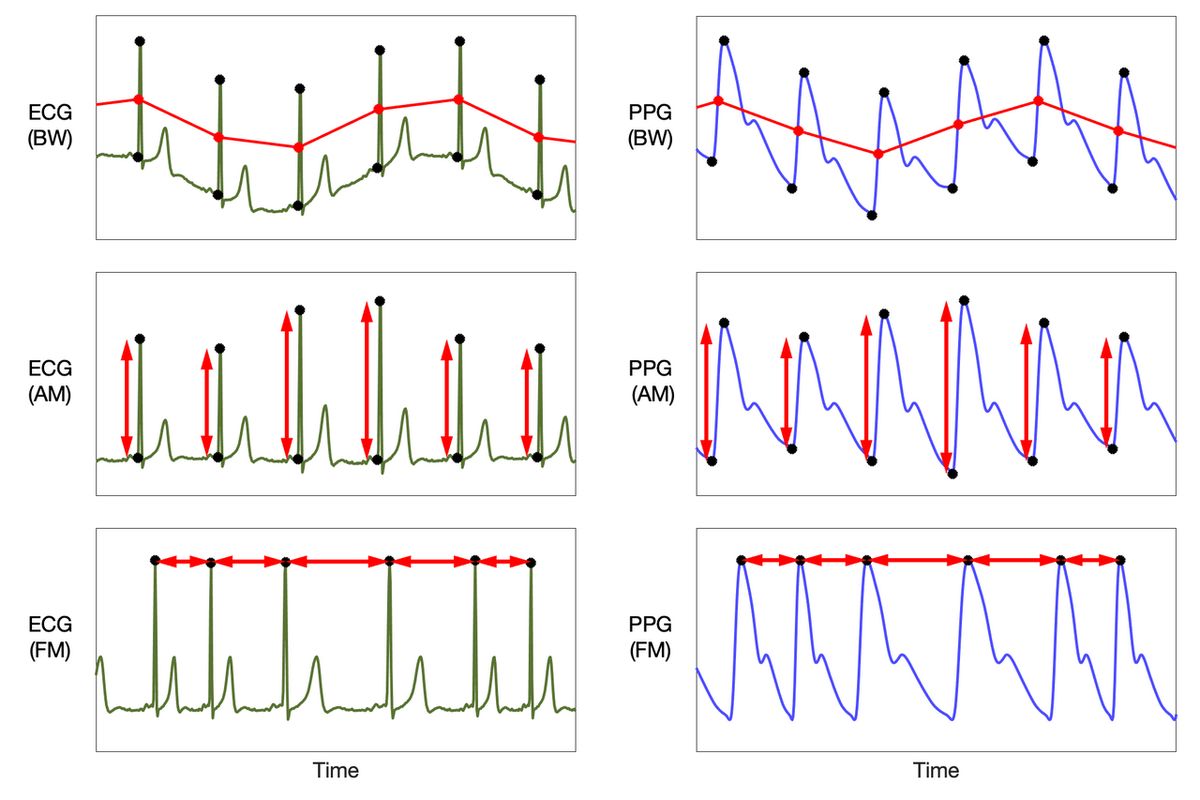
Banner image: Extraction of respiratory signals from the electrocardiogram (ECG) and photoplethysmogram… by Peterhcharlton, CC BY 3.0, via Wikimedia Commons.
The data behind this story
Topics: Cardiovascular · Stroke · Remote monitoring and wearables
Go deeper