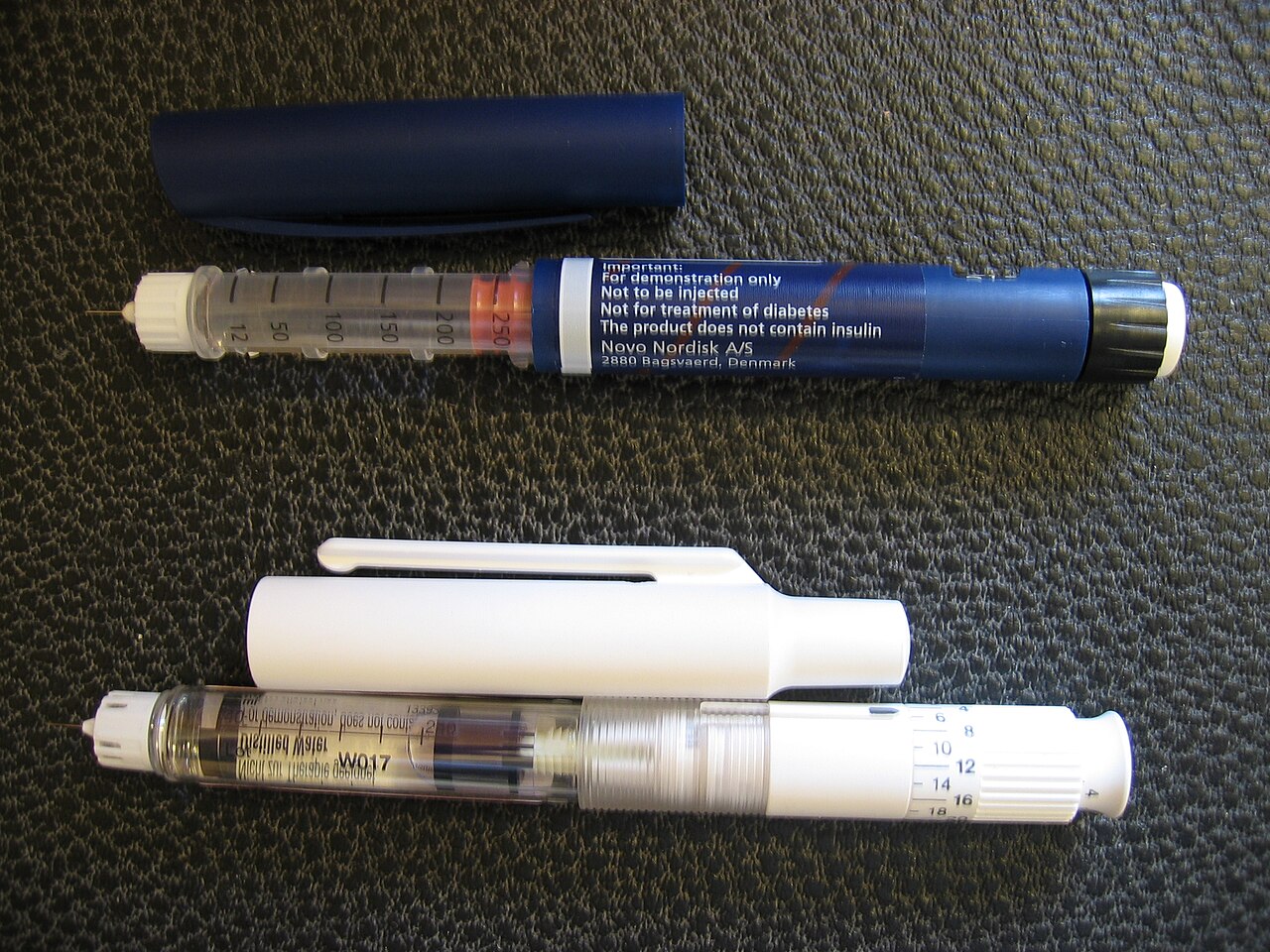
Insulin has saved lives for over a century. How it is delivered has changed a lot: from glass syringes, to pens, to pumps that work with sensors. Better devices make insulin easier, safer and more accurate to use.
Who needs insulin
Everyone with type 1 diabetes needs insulin. The IDF estimates that over 9.5 million people had type 1 diabetes in 2024, including 1.9 million children and adolescents under 20 [1]. Many people with type 2 diabetes also need insulin as the disease progresses.
The devices
- Vials and syringes: lowest cost, still common in many countries.
- Insulin pens: easier dosing and less pain; reusable or disposable.
- Smart pens: record each dose and share it with an app.
- Insulin pumps and patch pumps: steady delivery, linked with glucose sensors.
Access in low-income settings
Insulin needs to be kept cool, and supplies like syringes, needles and test strips add cost. In many places, people pay for these themselves. Simple, durable and affordable devices matter most here.
Go deeper
Want the full picture? Our report covers market size, growth, segments, countries and the key companies. Read the report or get a free sample.
A century of insulin, still not for all
Insulin was first used about 100 years ago. In 2021, WHO marked this with a report called Keeping the 100-year-old promise: making insulin access universal [3]. It found that one out of every two people who need insulin for type 2 diabetes do not get it [3]. Diabetes is rising in low- and middle-income countries, but their insulin use has not kept up [3].
Type 1 diabetes needs insulin every day
WHO estimates about 9.5 million people had type 1 diabetes in 2025, with more than 500,000 new cases [4]. Most live in high-income countries [4]. People with type 1 diabetes need insulin injections to survive [4]. For them, the choice of syringe, pen or pump shapes daily life.
Barriers beyond the device
- Price: insulin and devices can cost more than a family can pay.
- Cold storage: insulin must be kept cool, which is hard without steady power.
- Testing supplies: safe insulin use needs blood sugar checks, which add cost.
- Training: people need to learn doses, injection sites and how to handle lows.
Which device for whom
Vials and syringes are the cheapest. Pens are easier to use and more accurate for small doses. Pumps give insulin through the day and work best with a continuous glucose monitor. "Smart" pens record each dose and send it to an app. The right choice depends on cost, training and the person's needs.
Insulin is not the whole story
Many people with type 2 diabetes manage with lifestyle change and tablets for years [4]. WHO lists metformin, sulfonylureas and SGLT-2 inhibitors as common medicines [4]. Insulin is added when these are no longer enough.
Key numbers at a glance
- 589 million adults aged 20–79 lived with diabetes in 2024 [2].
- About 9.5 million people with type 1 diabetes in 2025.
- More than 500,000 new type 1 cases a year.
- 1 in 2 people with type 2 diabetes who need insulin do not get it.
Safe use at home
- Store unopened insulin as the label says, usually in a fridge, and never freeze it.
- Rotate injection sites to avoid lumps under the skin.
- Use a new needle each time where possible.
- Check blood sugar as advised, and know the signs of low blood sugar: shaking, sweating, confusion.
- Carry fast-acting sugar in case of a low.
- Dispose of needles safely in a sharps container.
Complications insulin helps prevent
Over time, high blood sugar damages blood vessels in the heart, eyes, kidneys and nerves [4]. It can cause blindness, kidney failure, heart attack, stroke and foot ulcers that lead to amputation [4]. In 2023, diabetes directly caused 2.0 million deaths, and 44% were in people under 70 [4]. Good insulin delivery is one of the main tools to lower these numbers.
Global targets
WHO launched the Global Diabetes Compact in 2021 [4]. In 2022, member states agreed five global diabetes coverage targets for 2030 [4]. One of them is that all people with type 1 diabetes have access to affordable insulin and blood sugar self-monitoring.
Pens, pumps and the cost question
Newer devices bring real benefits, but they also add cost. Health systems that cannot yet supply steady human insulin to everyone face hard choices. WHO's 2021 report set out actions to widen access, including better prices, more local supply and stronger health systems [3]. For many countries, reliable vials, syringes, test strips and training remain the first priority. Pens and pumps follow as budgets allow.
Where to read more
All figures in this article come from public sources listed below. For more detail, start with the WHO diabetes fact sheet and WHO's 2021 report on insulin access. Each is free to read online.
Questions to ask your health worker
- Which device suits my dose and daily routine?
- How should I store insulin when travelling?
- How do I avoid and treat a low?
- How often should I change needles and injection sites?
- What is covered by my insurance or by a public scheme in my area?
Writing these down before a visit helps make the most of a short appointment.
What this means
The future is connected: pens and pumps that talk to sensors. But for millions, the priority is still a steady, affordable supply of insulin and the basic tools to use it.
Explore on Acuitas
- Insulin Delivery Devices market report – size, growth and key players
- Insulin Delivery Devices statistics – key numbers, trials and research in one place
- Top 10 fastest-growing Medical Devices markets
- Global Diabetes Care Devices Market Analysis – related market
- Global Diabetes Management Market Analysis – related market
- Global Diabetic Retinopathy Drugs Market Analysis – related market
- Diabetes (ages 20–79) – free chart in the Public Health Dashboard
- Diabetes (adults, WHO) – free chart in the Public Health Dashboard
- Get a free sample report or talk to our team
Topics: Diabetes
Sources
- IDF Diabetes Atlas 11th edition (NCBI Bookshelf): type 1 diabetes in 2024
- International Diabetes Federation: IDF Diabetes Atlas, 11th edition (2025)
- WHO news (12 Nov 2021): New WHO report maps barriers to insulin availability
- WHO fact sheet: Diabetes
Banner image: Insulin pen by No machine-readable author provided. PerPlex assumed (based…, Public domain, via Wikimedia Commons.
The data behind this story
Topics: Diabetes
Go deeper