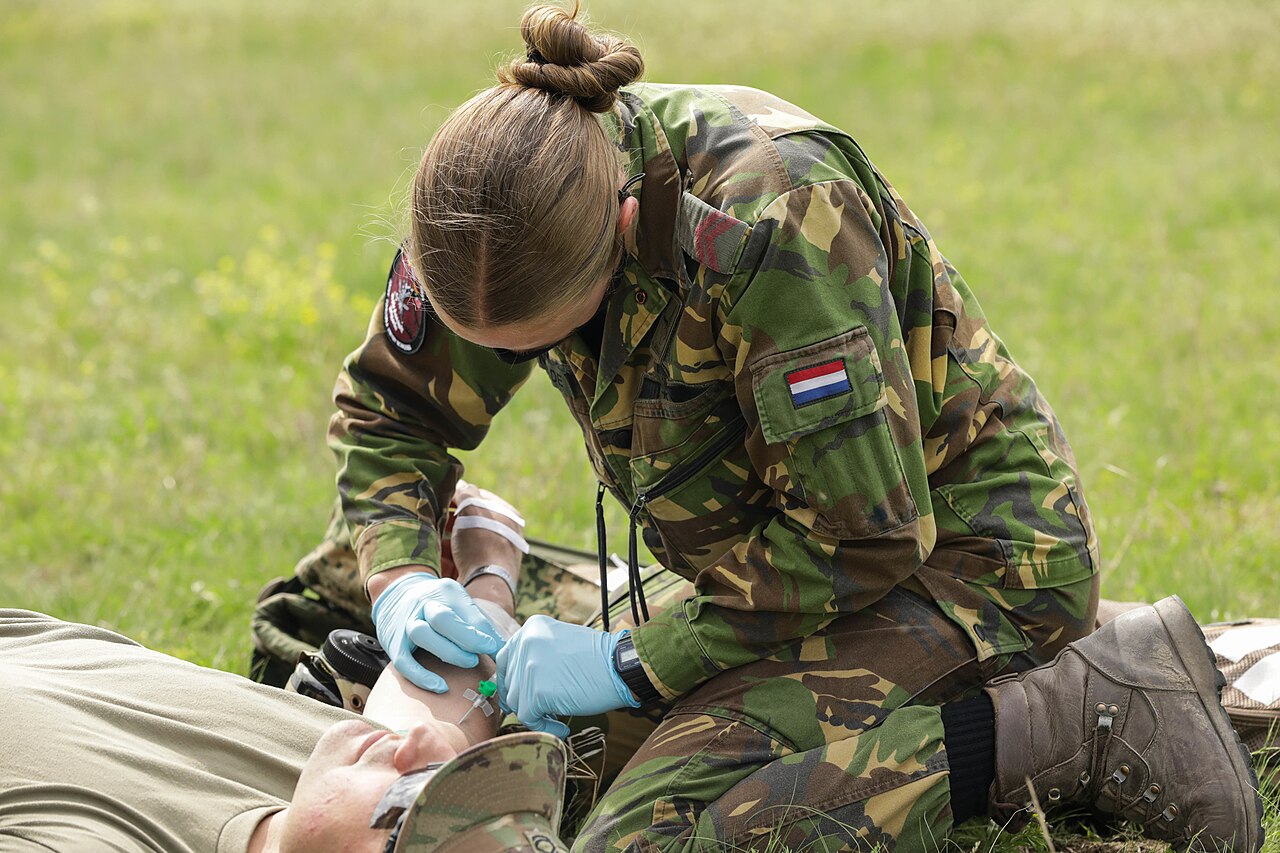
A needleless connector is a small valve at the end of an IV line or catheter. Nurses attach syringes and tubing to it without using needles. Connectors were introduced to protect health workers from needlestick injuries. But they are touched many times a day, and if not cleaned properly, germs can enter the bloodstream.
Why bloodstream infections matter
Central line-associated bloodstream infections (CLABSIs) are serious infections linked to catheters placed in large veins. AHRQ estimates that between 10,426 and 25,145 deaths from CLABSIs in US hospitals are preventable each year [1]. WHO notes that health care-associated infections lengthen hospital stays, cause disability, add to antibiotic resistance and cause avoidable deaths [2].
The connector's role
A 2015 systematic review found that colonisation of needleless connectors is thought to cause about 50% of catheter-related infections after insertion [3]. Gaps in aseptic technique, such as failing to disinfect, lead to contamination and build-up of germs (biofilm) inside connectors [3].
Scrub the hub
The CDC's CLABSI checklist advises scrubbing the access port or hub with friction immediately before each use, with an antiseptic such as chlorhexidine, povidone iodine, an iodophor or 70% alcohol [4].
- Clean hands before touching the line.
- Scrub the hub with friction for the recommended time.
- Let it dry before connecting.
- Use disinfecting caps between uses, where available.
- Change connectors on schedule and when visibly dirty.
- Remove lines as soon as they are no longer needed.
Connector designs
- Split septum: a simple slit that opens when a syringe is attached.
- Mechanical valves: with internal parts; some types allow blood to flow back on disconnection.
- Neutral, positive and negative displacement: designs that differ in how fluid moves when syringes connect and disconnect.
- Antimicrobial-coated connectors: designed to reduce germ growth.
Hospitals should use one standard type where possible, so all staff know how to use it correctly.
Antibiotic resistance
WHO reports that 1 in 6 lab-confirmed bacterial infections was resistant to antibiotics in 2023 [5]. Preventing bloodstream infections means fewer antibiotics are needed, which slows resistance. Small steps at the connector have wide effects.
Training and monitoring
Infection prevention teams use regular training, audits and feedback on CLABSI rates to keep standards high. Involving patients and families, for example by asking "Did you clean the hub?", can also help.
Key numbers at a glance
- US preventable CLABSI deaths: 10,426–25,145 a year (AHRQ).
- Connector colonisation may cause about 50% of post-insertion catheter infections.
- 1 in 6 bacterial infections resistant to antibiotics (2023).
Go deeper
Want the full picture? Our report covers market size, growth, segments, countries and the key companies. Read the report or get a free sample.
Health care infections more broadly
WHO says health care-associated infections have a global rate of 0.14%, increasing by 0.06% each year [2]. Of all sepsis cases managed in hospitals, 23.6% were health care-associated, and about 24.4% of those patients died [2]. Bloodstream infections from lines are one important part of this burden.
Peripheral IV lines
Connectors are also used on short peripheral IV lines in arms and hands, which are far more common than central lines. Infections from these lines get less attention but can still be serious. The same hub cleaning rules apply to every line.
Home infusions
More patients now receive IV antibiotics, nutrition or chemotherapy at home. Patients and carers need clear training on hand hygiene and hub cleaning, and on signs of infection such as fever, redness or swelling at the line site.
Questions for infection prevention teams
- Are all staff trained to scrub the hub before every access?
- Do we use disinfecting caps, and are they always stocked?
- Which connector type do we use, and is it standard across wards?
- How often do we review CLABSI rates and share them with staff?
Regular audits and feedback keep these habits strong.
In short
A ten-second scrub of the hub, every time, is one of the simplest and most effective infection controls in any hospital. It protects patients and helps slow antibiotic resistance.
What this means
Needleless connectors protect staff, but only clean connectors protect patients. Simple, consistent cleaning, good design and training prevent infections, save lives and reduce antibiotic use.
Where to read more
All figures in this article come from public sources listed below. For more detail, start with the CDC CLABSI checklist, the AHRQ CLABSI fact sheet and the 2015 review on connector disinfection. Each is free to read online. If anything here raises a question about your own health, take this article to your doctor or pharmacist and talk it through together. Buyers, investors and policy makers can also use these sources to check claims in sales materials and compare options on the same public evidence. Where public sources disagree or update their figures, we note the year of each number so readers can see how the picture changes over time. Readers who spot an error or a newer source are welcome to contact our team. Reader questions help us choose which topics to cover in future articles and reports. You can also explore the related market reports, statistics pages and free public health charts linked in the Explore section above, which bring the latest public data on this topic together in one place for easy comparison.
Explore on Acuitas
- Acute Care Needleless Connectors market report – size, growth and key players
- Acute Care Needleless Connectors statistics – key numbers, trials and research in one place
- Top 10 fastest-growing Medical Devices markets
- Global Ambulatory Surgery Center Market Analysis – related market
- Global Aminoglycosides Market Analysis – related market
- Global Anesthesia Monitoring Devices Market Analysis – related market
- Medicine sales: anti-infectives – free chart in the Public Health Dashboard
- Hospital beds – free chart in the Public Health Dashboard
- Get a free sample report or talk to our team
Topics: Infectious diseases · Hospital · Antibiotics
Sources
- AHRQ: Central line-associated bloodstream infections fact sheet
- WHO fact sheet: Patient safety
- Moureau NL, Flynn J. Disinfection of needleless connector hubs: clinical evidence systematic review (2015)
- CDC: Checklist for prevention of central line associated bloodstream infections
- WHO fact sheet: Antimicrobial resistance
Banner image: Intravenous therapy (6636952) by U.S. Army photo by Spc. Enrique Moya, Public domain, via Wikimedia Commons.
The data behind this story
Topics: Infectious diseases · Hospital · Antibiotics
Go deeper