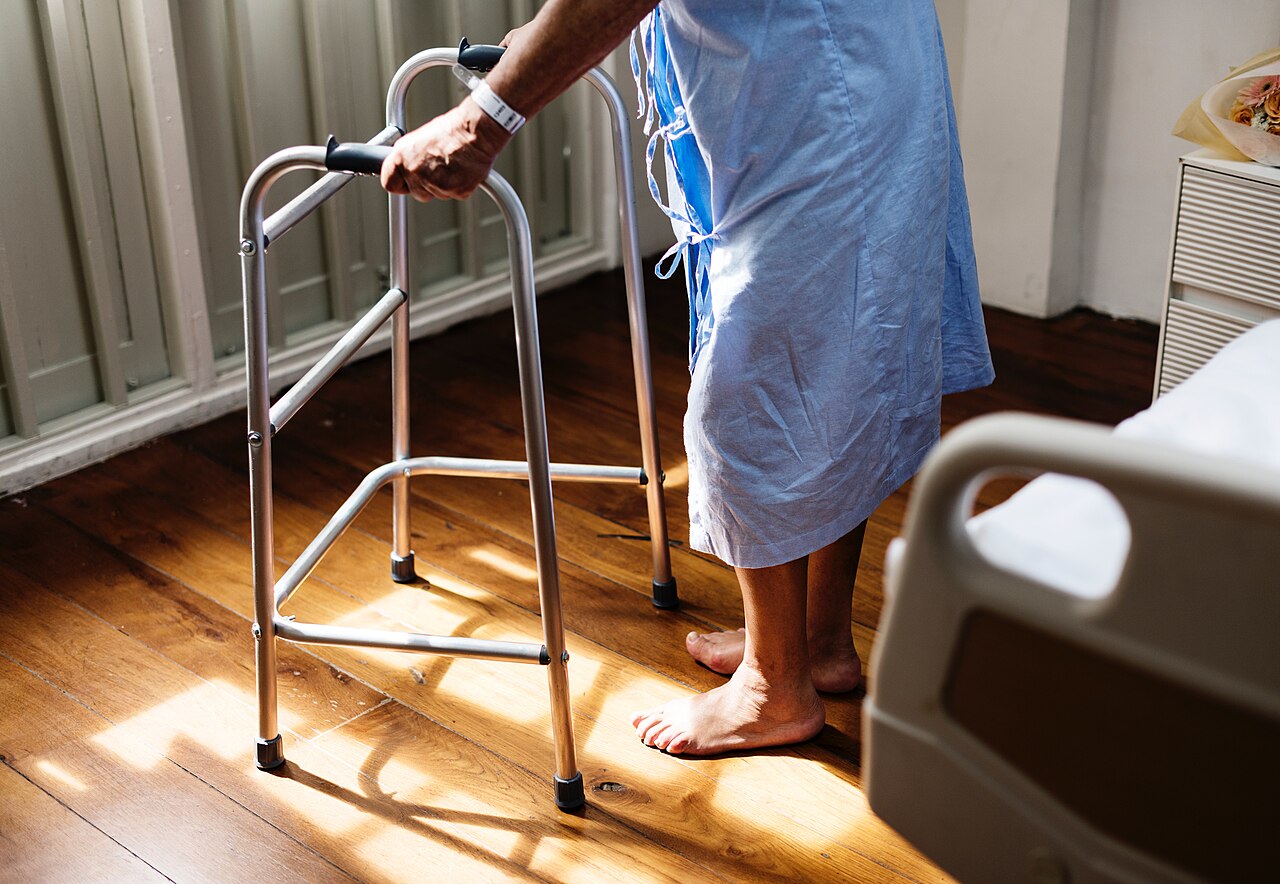
A cane, walker or rollator can be the difference between staying active and staying home. Walking aids help people keep their balance, move with confidence and avoid falls. As the world ages, more people will need them.
An ageing world
WHO says that by 2030, 1 in 6 people will be aged 60 or over, rising from 1 billion in 2020 to 1.4 billion. By 2050 this will reach 2.1 billion [1].
Falls are the big risk
WHO estimates about 842,000 deaths from falls in 2023, making falls the second-leading cause of unintentional injury death [2]. About 71% of these deaths were in people aged 60 and older [2]. Balance exercise cut the rate of falls by about 23% in trials [2].
The access gap
WHO and UNICEF found that more than 2.5 billion people need at least one assistive product, rising to 3.5 billion by 2050 [3]. In some low- and middle-income countries only 3% of people who need assistive products get them, compared with up to 90% in high-income countries [4].
Choosing the right aid
- Canes for mild balance problems.
- Crutches for short-term injuries.
- Walkers for more support.
- Rollators (walkers with wheels and a seat) for people who walk further.
A wrongly fitted aid can increase fall risk. A physiotherapist should check height and teach safe use.
Go deeper
Want the full picture? Our report covers market size, growth, segments, countries and the key companies. Read the report or get a free sample.
Where fall deaths happen
Falls are the second-leading cause of unintentional injury death, after road injuries [2]. Asia carries the largest share.
The South-East Asia and Western Pacific regions together had about 62% of all fall deaths [2]. In 2023, about 481,000 men and 361,000 women died from falls [2]. Falls were the eighth-leading cause of healthy years lost worldwide [2].
Who is most at risk
For older people, risk rises with weaker balance, strength, walking, vision or memory. Medicines that cause dizziness or low blood pressure also add risk [2]. After a fall, many people lose confidence and move less. That can start a cycle of growing frailty [2].
What prevents falls
- Balance and strength exercise cut the rate of falls by about 23% in trials. Tai Chi is another option [2].
- Home hazard checks cut fall rates by 38% in people already at high risk [2].
- Medicine reviews and treatment for poor vision, poor footwear and dizziness [2].
- Personal plans for people who fall again and again [2].
WHO says routine vitamin D should not be sold as a general fall-prevention step for all older adults [2]. WHO's Step Safely package sets out these measures for policy makers [2].
An ageing world, unevenly
In Japan, about 30% of people are already over 60 [1]. But the fastest change is now in low- and middle-income countries. By 2050, two-thirds of people over 60 will live there [1]. These are the same places where access to assistive products is lowest. WHO and UNICEF reported that almost one billion people who need assistive products are denied access [3].
Fitting and follow-up
A walking aid only helps if it fits and is used the right way. Height, grip and weight limits all matter. People should be shown how to use stairs and kerbs, and how to get up from a chair. Aids should be checked as needs change. Good services join the product to training and follow-up.
Common health conditions in older age
WHO lists conditions that become common as people age: hearing loss, cataracts, back and neck pain, osteoarthritis, COPD, diabetes, depression and dementia [1]. Many older people have several at once [1]. Each can affect balance and walking. Poor eyesight makes it harder to see steps. Arthritis makes standing up painful. Dementia can make it hard to remember how to use an aid.
Falls in hospitals and care homes
WHO says falls in homes, hospitals and care homes each need different prevention [2]. In care homes and hospitals, steps include reviewing medicines, supervised exercise, safer rooms and good staff practices [2]. Walking aids should be within reach, and beds and chairs at the right height. Not every step that works at home has the same evidence in institutions [2].
What happens after a fall
Falls prevention also means a good response when a fall happens [2]. That includes first aid, emergency care, fast treatment of fractures and head injury, rehabilitation and a review to prevent the next fall [2]. A new or better-fitted walking aid is often part of the plan after a fall.
Children and workers fall too
Falls are not only a problem for older people. Children fall from windows, stairs, balconies and playgrounds [2]. Workers fall from heights in construction, farming and transport [2]. But older adults face the greatest risk of dying, and the greatest need for mobility aids.
Key numbers at a glance
- 842,000 fall deaths in 2023, 71% in people aged 60+.
- Balance exercise cut fall rates by about 23%.
- Home hazard checks cut fall rates by 38% in high-risk people.
- 2.5 billion people need assistive products, rising to 3.5 billion by 2050.
- Access can be as low as 3% in some countries.
Walking aids, exercise and safer homes together keep older people moving and safe.
Where to read more
All figures in this article come from public sources listed below. For more detail, start with the WHO fact sheets on falls and on ageing, and the WHO and UNICEF Global report on assistive technology. Each is free to read online.
What this means
Walking aids are low-cost tools with a big effect on independence. Lighter materials, smart features such as fall alerts, and better access in poorer countries are the main growth areas.
Explore on Acuitas
- Assisted Walking Aids market report – size, growth and key players
- Assisted Walking Aids statistics – key numbers, trials and research in one place
- Top 10 fastest-growing Medical Devices markets
- Global 3D Printed Implants Market Analysis – related market
- Global Anti-Aging Market Analysis – related market
- Global Audiology Devices Market Analysis – related market
- People aged 65 and over – free chart in the Public Health Dashboard
- Knee replacements – free chart in the Public Health Dashboard
- Get a free sample report or talk to our team
Topics: Geriatric · Rehabilitation · Bones and joints
Sources
- WHO fact sheet: Ageing and health
- WHO fact sheet: Falls
- WHO news (16 May 2022): Global report on assistive technology
- UNICEF: UNICEF and WHO launch the first global report on assistive technology
Banner image: A woman supporting herself with a walking frame by rawpixel.com, CC0, via Wikimedia Commons.
The data behind this story
Topics: Geriatric · Rehabilitation · Bones and joints
Go deeper