Eye supplements are sold for tired eyes, screen time and ageing vision. Most claims are loose. But one formula, tested in large US government trials, does have real evidence for one condition.
Vision problems are common
WHO estimates that at least 2.2 billion people have a near or distance vision impairment. For at least 1 billion, it could have been prevented or has not been treated [1].
Where supplements have evidence
The US National Eye Institute ran two large trials, AREDS and AREDS2. They found that a supplement formula lowers the risk of moving from intermediate to advanced age-related macular degeneration (AMD) by about 25% [2]. AREDS2 swapped beta-carotene for lutein and zeaxanthin, which removed a lung cancer risk for smokers [3].
The formula did not prevent AMD from starting [4]. It is meant for people a doctor has found to have intermediate AMD.
What supplements cannot do
- They do not replace glasses. Refractive error is a top cause of vision loss [1].
- They do not treat cataract. Surgery does, yet 1 in 2 people who need it cannot get it [1].
- Diabetic retinopathy needs early eye checks and treatment [1].
Go deeper
Want the full picture? Our report covers market size, growth, segments, countries and the key companies. Read the report or get a free sample.
Near vision: the biggest unmet need
The leading cause of near vision loss is presbyopia, the normal stiffening of the eye's lens with age. It affects about 826 million people whose near vision has not been corrected [1]. A simple pair of reading glasses fixes it. No supplement does.
In parts of sub-Saharan Africa, more than 80% of near vision loss is not addressed. In high-income regions the rate is below 10% [1]. Distance vision loss is about 4 times more common in low- and middle-income regions than in high-income ones [1].
Vision loss costs the world about US$411 billion a year in lost productivity. Closing the gap in care would cost about US$25 billion [1].
More on the AREDS trials
The first AREDS formula had vitamins C and E, beta-carotene, zinc and copper. It cut the risk of moving to advanced AMD by 25% and the risk of moderate vision loss by 19% [5]. AREDS2 swapped beta-carotene for lutein and zeaxanthin. That made it safer for smokers and more effective [3].
A later look at the scans found that, in late-stage dry AMD, the supplement slowed the growth of damaged areas towards the centre of the retina [6].
Who should take it
- People told by an eye doctor that they have intermediate AMD, or advanced AMD in one eye.
- Not people with healthy eyes hoping to prevent AMD. The trials did not show that benefit [4].
- Not as a fix for glasses, cataract or diabetic eye disease.
Eye checks matter most
Many eye diseases have no early symptoms. For diabetic eye disease, early checks and treatment are key to avoid permanent vision loss [1]. Glasses and cataract surgery are among the most cost-effective health care there is [1]. WHO's SPECS 2030 effort aims to reach more than 800 million people who need glasses [1].
Children's eyes
In low-income countries, a leading cause of vision loss in children is congenital cataract. In middle-income countries it is more often retinopathy of prematurity, an eye disease in babies born early [1]. Uncorrected refractive error is a leading cause in children and adults in every country [1]. Children with poor vision can fall behind in school [1]. School eye checks and low-cost glasses can change this. Supplements do not.
How vision loss affects lives
Adults with vision loss can have lower rates of work and higher rates of depression and anxiety [1]. In older adults it adds to loneliness, walking problems, falls and fractures, and earlier moves into care homes [1].
Common eye problems that cause discomfort
Dry eye, conjunctivitis and blepharitis do not usually cause vision loss. But they are among the most common reasons people visit eye clinics [1]. Treatment aims to ease symptoms and stop them getting worse [1]. Many "screen eye" supplements target these problems, with little evidence. Eye drops, rest breaks and treating the cause are the usual care.
Vision rehabilitation
For people whose vision cannot be restored, vision rehabilitation helps them make the most of the sight they have [1]. It is very effective after diabetic eye disease, glaucoma, injury and AMD [1].
Key numbers at a glance
- At least 2.2 billion people have vision impairment.
- For at least 1 billion, it was preventable or not yet treated.
- 826 million have uncorrected near vision.
- AREDS formulas cut progression to advanced AMD by about 25%.
- Vision loss costs about US$411 billion a year.
Glasses, cataract surgery and eye checks solve most vision problems. Supplements help only a specific group.
Where to read more
All figures in this article come from public sources listed below. For more detail, start with the WHO fact sheet on blindness and vision impairment and the National Eye Institute pages on AREDS. Each is free to read online.
What this means
An ageing population will keep demand high. Brands that follow the tested AREDS2 formula and make honest claims are on firmer ground than those selling "screen fatigue" cures.
Explore on Acuitas
- Eye Health Supplements market report – size, growth and key players
- Eye Health Supplements statistics – key numbers, trials and research in one place
- Top 10 fastest-growing OTC & Nutraceuticals markets
- Global Adaptogens Market Analysis – related market
- Global Amino Acid Market Analysis – related market
- Global Anti-Aging Market Analysis – related market
- Cataract operations – free chart in the Public Health Dashboard
- Stunting in children under 5 – free chart in the Public Health Dashboard
- Get a free sample report or talk to our team
Topics: Eye health · Nutrition · Geriatric
Sources
- WHO fact sheet: Blindness and vision impairment
- National Eye Institute: About AREDS and AREDS2
- National Eye Institute: NIH study confirms benefit of supplements for slowing AMD
- NIH Office of Dietary Supplements: ODS Update, September 2024 (AREDS supplements)
- National Eye Institute: AREDS results on advanced AMD and vision loss
- National Eye Institute: Supplements slow disease progression during late stage dry AMD
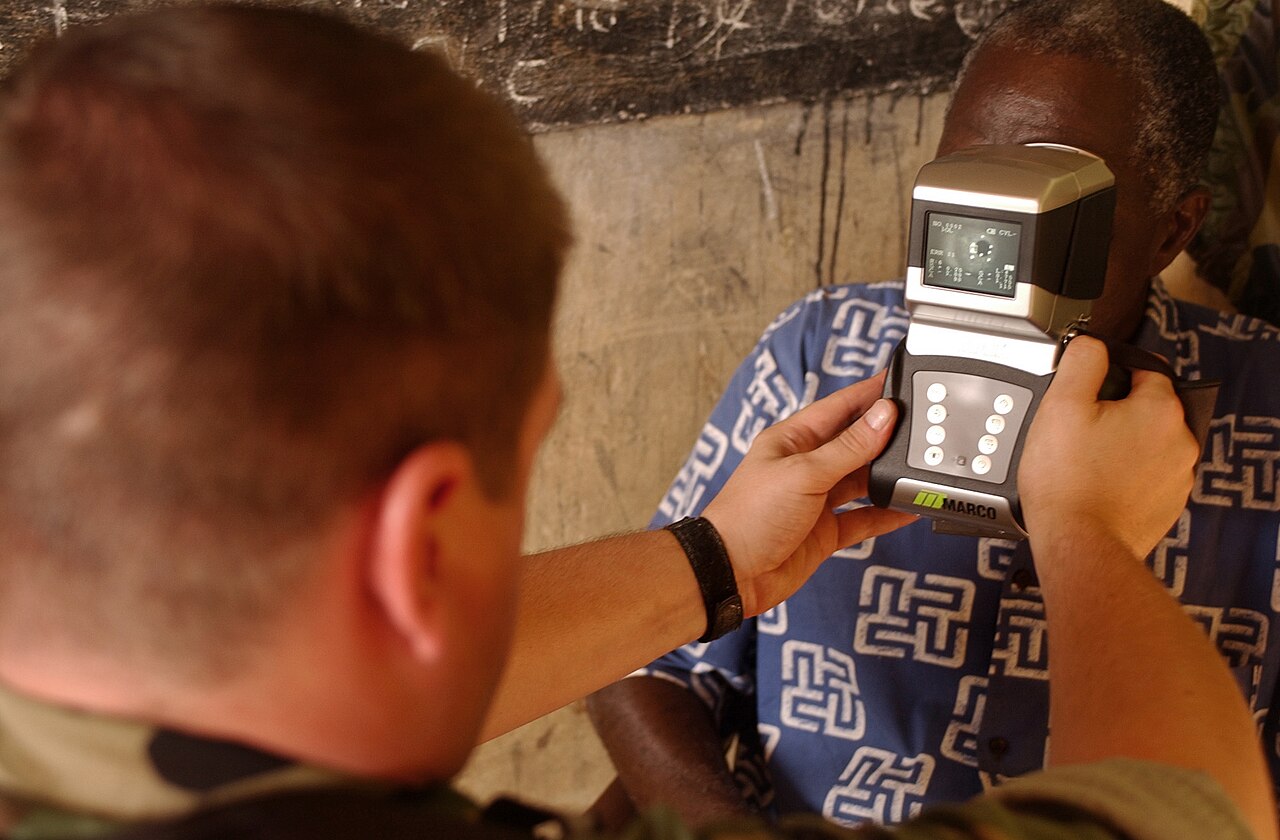
Banner image: Eye examination in the field by Shane T. McCoy, Public domain, via Wikimedia Commons.
The data behind this story
Topics: Eye health · Nutrition · Geriatric
Go deeper