For years, confirming Alzheimer's disease meant a PET brain scan or a spinal tap. Both are costly or uncomfortable, and many people never got either. Blood tests are now changing that.
How many people are affected
WHO reports that 57 million people were living with dementia in 2021, and there are nearly 10 million new cases every year [1]. Alzheimer's disease may cause 60–70% of cases [1]. Dementia cost the world economy US$1.3 trillion in 2019 [1].
The first cleared blood test
On 16 May 2025, the US FDA cleared the Lumipulse G pTau217/β-Amyloid 1-42 Plasma Ratio [2]. It measures two proteins in blood and compares them. It is for adults aged 55 and older who already show signs of the disease [2]. It helps detect the amyloid plaques linked to Alzheimer's.
Ways to diagnose today
- Memory and thinking tests in the clinic.
- Brain imaging: MRI, and amyloid or tau PET scans.
- Spinal fluid tests for amyloid and tau.
- Blood tests, now moving from research into clinics [3].
Why earlier answers matter
Newer Alzheimer's drugs work best early, and they need proof of amyloid first. A simple blood test could help many more people get checked. WHO also lists risk factors that can be managed, such as high blood pressure, diabetes, hearing loss and physical inactivity [1].
Go deeper
Want the full picture? Our report covers market size, growth, segments, countries and the key companies. Read the report or get a free sample.
Signs that should prompt a check
WHO lists early signs of dementia [1]:
- Forgetting recent events, or losing things.
- Getting lost when walking or driving.
- Confusion, even in familiar places, and losing track of time.
- Trouble solving problems, making decisions or finding words.
- Difficulty with familiar tasks.
Mood and behaviour can change before memory problems appear [1]. Dementia can also start before age 65. Young-onset dementia makes up to 9% of cases [1].
Where people with dementia live
More than 60% of people with dementia live in low- and middle-income countries [1]. These are the places with the fewest PET scanners and spinal fluid labs. A simple blood test could matter most there, if it becomes affordable.
The carers
Family and friends give on average 5 hours of care and supervision a day [1]. Women give 70% of care hours [1]. An early diagnosis gives families time to plan, find support and make legal and money decisions together. WHO built iSupport, a free self-help programme for carers [1].
Can risk be lowered?
WHO lists things that may lower the risk of dementia [1]:
- Being physically active and not smoking.
- Avoiding harmful alcohol use and eating a healthy diet.
- Keeping blood pressure, cholesterol and blood sugar in check.
- Using hearing aids where needed.
- Staying socially and mentally active.
- Less exposure to air pollution.
What blood tests do not do
The first cleared test is for people aged 55 and older who already show symptoms [2]. It is not a screening test for healthy people. The Alzheimer's Association notes that blood tests are often used as a first step, followed by more testing [3]. Results still need a doctor to interpret them alongside memory tests and history.
The policy picture
WHO's Global action plan on dementia has been extended to 2031 [1]. Its Global Dementia Observatory tracks 35 indicators across countries [1]. Diagnosis rates are one of the key gaps it measures.
Current treatments
There is no cure for dementia, but a lot can be done to help [1]. Medicines such as donepezil are used for Alzheimer's disease, and memantine for severe Alzheimer's and vascular dementia [1]. Blood pressure and cholesterol medicines can prevent further damage in vascular dementia [1]. Non-drug care, such as rehabilitation, physical activity, social contact and memory exercises, can improve daily life [1].
The newer amyloid-targeting drugs are meant for the early stage of Alzheimer's. They need proof of amyloid before use. This is a main reason why fast, simpler tests are in demand.
Rights of people with dementia
WHO warns that people with dementia are often denied basic rights and freedoms [1]. In many countries, physical and chemical restraints are widely used in care homes and hospitals, even where rules exist to prevent this [1]. Early diagnosis can help people state their wishes while they still can. WHO advises naming trusted people to help with decisions and writing down care choices in advance [1].
As dementia progresses
Over time, people may not recognise family or friends. They may have trouble moving, eating and drinking, and may lose bladder and bowel control [1]. Behaviour changes can be distressing for everyone [1]. Knowing the diagnosis early helps families prepare for these changes and arrange support in time.
Key numbers at a glance
- 57 million people lived with dementia in 2021.
- Nearly 10 million new cases each year.
- Alzheimer's may cause 60–70% of cases.
- Dementia cost US$1.3 trillion in 2019.
- The first FDA-cleared Alzheimer's blood test came on 16 May 2025.
Simpler tests could help millions get answers sooner, if they are used with care.
Where to read more
All figures in this article come from public sources listed below. For more detail, start with the WHO dementia fact sheet, the Global Dementia Observatory, and the US FDA notice on the first cleared blood test. Each is free to read online.
What this means
Blood tests could make Alzheimer's checks part of normal primary care. Doctors will still need to confirm results and explain them with care.
Explore on Acuitas
- Alzheimers Dignostic market report – size, growth and key players
- Alzheimers Dignostic statistics – key numbers, trials and research in one place
- Top 10 fastest-growing Healthcare Services markets
- Global Alzheimer Drugs Market Analysis – related market
- Global Anti-Nerve Growth Factor Market Analysis – related market
- Global Antimicrobial Susceptibility Testing Market Analysis – related market
- Clinical trials: Alzheimer's disease – free chart in the Public Health Dashboard
- Alzheimer's disease death rate – free chart in the Public Health Dashboard
- Get a free sample report or talk to our team
Topics: Alzheimer's · Brain and nerves · Diagnostics and lab testing
Sources
- WHO fact sheet: Dementia
- US FDA press release (16 May 2025): FDA clears first blood test used in diagnosing Alzheimer's disease
- Alzheimer's Association: First blood test used in diagnosing Alzheimer's cleared by FDA
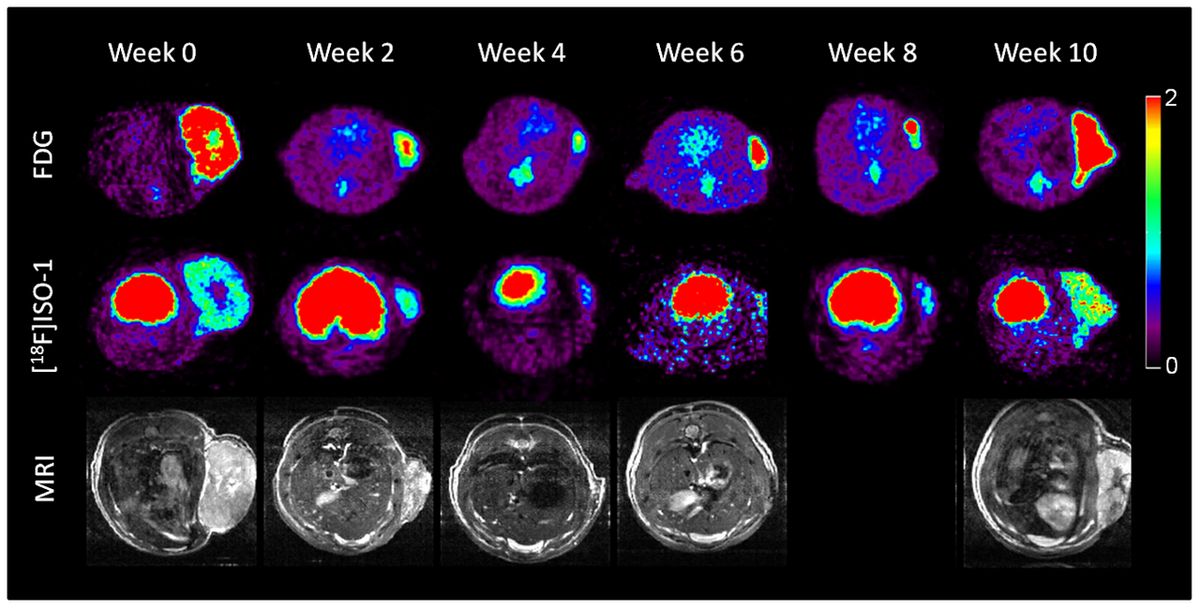
Banner image: PET scans of brain tumor using Sigma-2 Ligands by Shoghi KI, Xu J, Su Y, He J, Rowland D, et al., CC0, via Wikimedia Commons.
The data behind this story
Topics: Alzheimer's · Brain and nerves · Diagnostics and lab testing
Go deeper