When someone has a heart attack, a stroke, a severe injury or a difficult birth, the first minutes matter most. Ambulance services bring care to the patient and get them to the right hospital quickly. In many countries, this link is weak or missing.
Why response time matters
WHO says the Disease Control Priorities project estimates that more than half of deaths and a third of disability in low- and middle-income countries could be addressed by effective emergency care [1]. Injuries alone killed 4.4 million people in 2019, 8% of all deaths [1]. These include injuries, infections, sudden worsening of chronic diseases and complications of pregnancy [2].
Road crashes
Road crashes are one of the biggest reasons ambulances are called. WHO reports about 1.16 million road deaths each year, and 20–50 million more people injured [3]. Road injuries are the leading cause of death for children and young adults aged 5–29 [3].
Low- and middle-income countries have about 60% of the world's vehicles but 92% of road deaths [3]. Road crashes cost most countries about 3% of their GDP [3]. Men are about three times more likely to die in road crashes than women [3].
Service models
- Public services run by governments, often free at the point of use.
- Public-private partnerships, where a private operator runs a public toll-free service.
- Private ambulances run by hospitals or companies, often paid for by patients.
- Community and volunteer services, common in rural areas.
- Air ambulances for remote areas and long transfers.
Ambulances also differ by level of care. Basic life support vehicles carry oxygen and first aid. Advanced life support vehicles carry trained paramedics, heart monitors, defibrillators and emergency drugs.
Gaps
- Few ambulances per person, especially in rural areas.
- Long response times because of distance and traffic.
- Staff with limited training.
- No single emergency number, or poor dispatch systems.
- Ambulances that take patients to the nearest hospital, not the right one.
- Costs that delay families from calling.
Global commitment
In 2019, the World Health Assembly adopted a resolution on emergency and trauma care, urging countries to build integrated systems from the scene to the hospital [2]. WHO's "Emergency care saves lives" initiative supports this work [1].
Prevention still counts
WHO notes that correct helmet use cuts the risk of death in a motorcycle crash by more than six times, and brain injury by up to 74% [3]. Safer roads, lower speeds and no drink-driving reduce how often ambulances are needed.
Key numbers at a glance
- More than half of deaths in low- and middle-income countries could be addressed by emergency care.
- 1.16 million road deaths a year.
- 92% of road deaths in low- and middle-income countries.
- Injuries killed 4.4 million people in 2019.
Go deeper
Want the full picture? Our report covers market size, growth, segments, countries and the key companies. Read the report or get a free sample.
Speed and road crashes
WHO says every 1% rise in average speed raises the risk of a fatal crash by 4% and a serious crash by 3% [3]. The risk of death for a pedestrian hit by a car rises 4.5 times between 50 km/h and 65 km/h [3]. More than half of road deaths are pedestrians, cyclists and motorcyclists [3].
The chain of survival
- Someone recognises the emergency and calls for help.
- A dispatcher sends the right vehicle and gives advice by phone.
- Bystanders give first aid or CPR.
- Ambulance staff treat the patient on scene and on the way.
- The patient goes to the hospital that can treat their condition.
- The emergency team is ready on arrival.
A weak link anywhere in this chain costs lives. Ambulances work best as part of a full system.
Maternal emergencies
WHO lists complications of pregnancy among the conditions emergency care can treat [2]. Heavy bleeding after birth and eclampsia need fast transport to a hospital that can give blood and surgery. Free ambulance schemes for pregnant women have been used in several countries to cut delays.
Where to read more
All figures in this article come from public sources listed below. For more detail, start with WHO's "Emergency care saves lives" pages and the WHO fact sheet on road traffic injuries. Each is free to read online. If anything here raises a question about your own health, take this article to your doctor or pharmacist and talk it through together.
Helmets and seat belts
WHO says correct helmet use cuts the risk of death in a crash by more than six times and brain injury by up to 74% [3]. Drink-driving risk rises sharply at a blood alcohol level of 0.04 g/dl or more [3]. Using amphetamines raises the risk of a fatal crash about five times [3]. These rules prevent many of the injuries ambulances see.
Questions for planners
- Is there one emergency number everyone knows?
- How long do ambulances take to arrive in cities and in villages?
- Are crews trained in advanced life support?
- Do ambulances take patients to the right hospital?
What this means
Ambulance services are a core part of health systems, not an extra. Single emergency numbers, good dispatch, trained crews and links to the right hospitals save lives. Demand will grow with road traffic, ageing populations and chronic disease.
Explore on Acuitas
- Ambulance Service market report – size, growth and key players
- Ambulance Service statistics – key numbers, trials and research in one place
- Top 10 fastest-growing Healthcare Services markets
- Global Air Ambulance Life Support Solutions Market Analysis – related market
- Global Airway Management Devices Market Analysis – related market
- Global Alexipharmic Drugs Market Analysis – related market
- Road traffic deaths – free chart in the Public Health Dashboard
- Accident (unintentional injury) death rate – free chart in the Public Health Dashboard
- Get a free sample report or talk to our team
Topics: Emergency and acute care · Trauma
Sources
- WHO: Emergency care saves lives
- WHO news (27 May 2019): World Health Assembly resolution on emergency and trauma care
- WHO fact sheet: Road traffic injuries
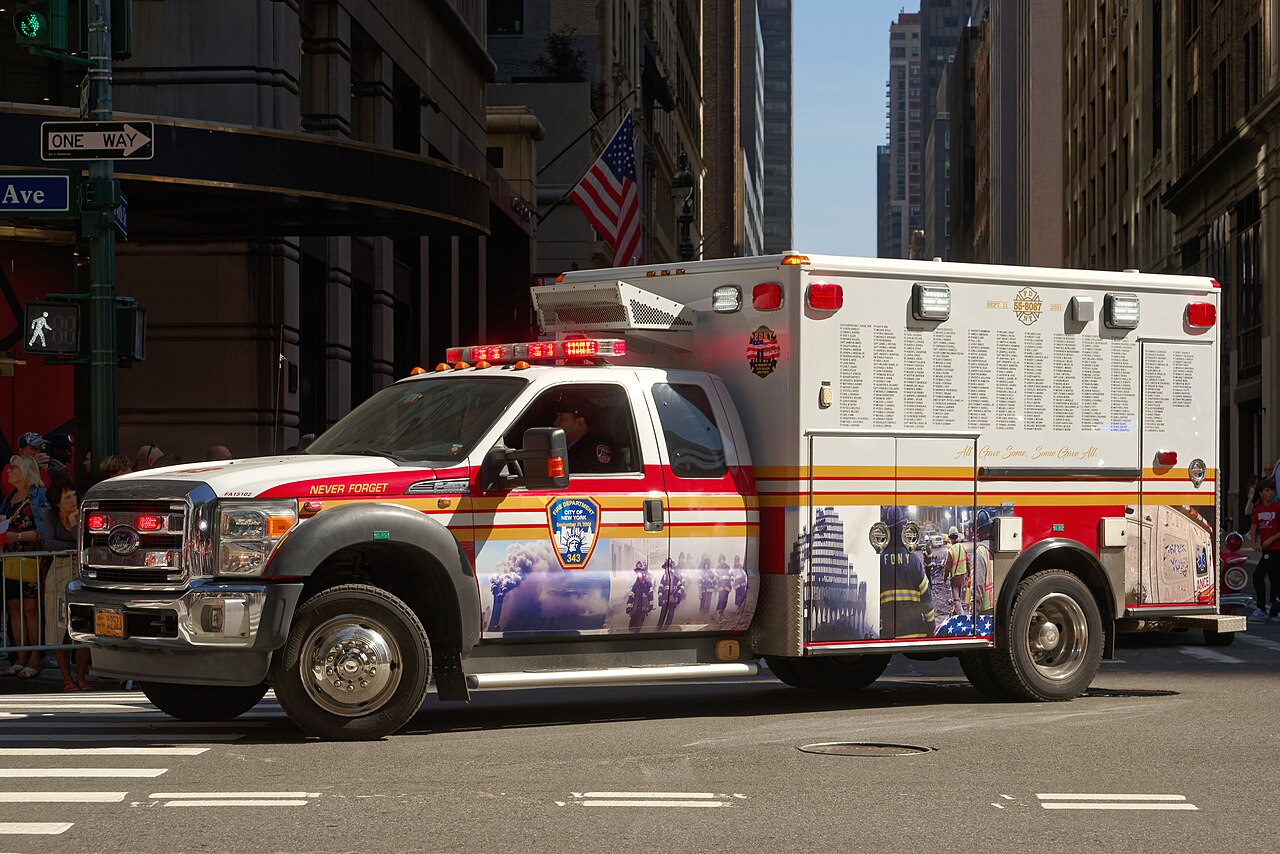
Banner image: New York Fire Department Ambulance at Pulaski Day Parade, 20231001 1350 1160 by Jakub Hałun, CC BY 4.0, via Wikimedia Commons.
The data behind this story
Topics: Emergency and acute care · Trauma
Go deeper