Cancer care has changed a lot in 20 years. Chemotherapy is still used, but many patients now get drugs aimed at the exact changes in their tumour. Others get medicines that help their own immune system fight the cancer.
The burden is growing
The WHO cancer agency, IARC, estimated 20 million new cancer cases and 9.7 million deaths in 2022 [1]. About 1 in 5 people develop cancer in their lifetime [1]. Over 35 million new cases are expected in 2050, a 77% rise [1].
Main types of cancer drugs
- Chemotherapy: kills fast-growing cells. Still the base of many regimens.
- Targeted therapy: blocks a specific gene change or protein in the tumour.
- Immunotherapy: checkpoint inhibitors and cell therapies that help immune cells attack cancer.
- Hormone therapy: for breast and prostate cancers that depend on hormones.
- Antibody-drug conjugates: antibodies that carry a toxic drug straight to cancer cells.
The access gap
A WHO survey of 115 countries found only 39% covered the basics of cancer care in their core health packages. Only 28% also covered palliative care [1]. In low-HDI countries, women are less likely to be diagnosed with breast cancer but more likely to die from it [1].
Go deeper
Want the full picture? Our report covers market size, growth, segments, countries and the key companies. Read the report or get a free sample.
The deadliest cancers
Lung cancer causes the most cancer deaths, about 1.8 million, or 18.7% of the total [1]. Its return as the most common cancer is likely linked to tobacco use in Asia [1]. Breast cancer is the most common cancer in women in 157 of 185 countries [1]. Cervical cancer had 661,044 new cases and 348,186 deaths in 2022, yet it can be eliminated through vaccines and screening [1].
Living after cancer
About 53.5 million people were alive within five years of a cancer diagnosis in 2022 [1]. Many take long-term treatments, such as hormone therapy or targeted pills. This long treatment time is a big part of drug spending.
Growth will be fastest in poorer countries
New cancer cases are expected to rise by 77% by 2050 [1]. High-HDI countries will add the most cases, about 4.8 million more [1]. But the rise will be steepest in low-HDI countries, at 142%, and in medium-HDI countries, at 99% [1]. Cancer deaths in these countries are expected to almost double [1].
Big gaps in what health plans pay for
WHO's survey of 115 countries found large gaps between rich and poor countries [1]:
- Lung cancer services were 4–7 times more likely to be covered in high-income countries.
- Radiation therapy was about 4 times more likely to be covered.
- Stem cell transplants were 12 times more likely to be covered.
When health plans do not cover a drug, patients pay out of pocket or go without. That limits how far new medicines reach.
The risk factors behind the rise
Tobacco, alcohol and obesity are key drivers of the rising number of cancers. Air pollution is also a major factor [1]. Prevention, such as tobacco control and HPV vaccines, will do as much as new drugs to change the numbers.
The latest WHO figures
WHO's fact sheet now gives 2024 numbers. Cancer caused nearly 10 million deaths in 2024, nearly one in six of all deaths [2]. About 400,000 children and teenagers aged 0–19 develop cancer each year [2].
Prevention changes the drug picture
WHO says about 38% of cancers can be prevented by avoiding risk factors and using proven prevention [2]. Nearly a quarter of cancer deaths are due to tobacco, alcohol, high body weight, low fruit and vegetable intake and lack of exercise [2]. Infections such as HPV and hepatitis cause about 30% of cancer cases in low- and lower-middle-income countries [2]. HIV raises the risk of cervical cancer six-fold [2]. Vaccines against HPV and hepatitis B prevent cancers that would otherwise need years of costly treatment.
How treatment is chosen
Each cancer type needs its own treatment plan, so a correct diagnosis comes first [2]. Treatment usually combines surgery, radiotherapy and systemic therapy. That includes chemotherapy, hormone treatments and targeted biological therapies [2]. Finishing treatment on time matters for results [2]. Breast, cervical, oral and colorectal cancers have high cure rates when found early and treated well [2].
Pain relief and palliative care
More than 80% of people with cancer in the final stage have moderate to severe pain [2]. WHO strongly recommends better access to oral morphine [2]. Palliative care can relieve physical, emotional and spiritual problems for more than 90% of patients with advanced cancer [2]. Low-cost essential medicines like morphine are as important to patients as new drugs.
Key numbers at a glance
- About 20 million new cancer cases and 9.7 million deaths in 2022.
- Nearly 10 million cancer deaths in 2024.
- Over 35 million new cases expected in 2050.
- About 38% of cancers can be prevented.
- Only 39% of countries surveyed covered the basics of cancer care.
Prevention, early diagnosis and fair access will decide how much benefit new drugs bring.
Where to read more
All figures in this article come from public sources listed below. For more detail, start with the WHO cancer fact sheet and the IARC Global Cancer Observatory, which give cancer cases and deaths for 185 countries. Each is free to read online.
What this means
New drugs are extending lives, but high prices limit who gets them. Biosimilars, generic versions and better testing to match patients to the right drug will shape how far these gains reach.
Explore on Acuitas
- Oncology/Cancer Drugs market report – size, growth and key players
- Oncology/Cancer Drugs statistics – key numbers, trials and research in one place
- Top 10 fastest-growing Pharmaceuticals markets
- Global Apheresis Equipments Market Analysis – related market
- Global Autologous Matrix-induced Chondrogenesis Market Analysis – related market
- Global Biological Safety Testing Market Analysis – related market
- Early deaths from long-term diseases (WHO) – free chart in the Public Health Dashboard
- Clinical trials: Cancer – free chart in the Public Health Dashboard
- Get a free sample report or talk to our team
Topics: Oncology · Biologics and biosimilars
Sources
- WHO/IARC news (1 Feb 2024): Global cancer burden growing, amidst mounting need for services
- WHO fact sheet: Cancer
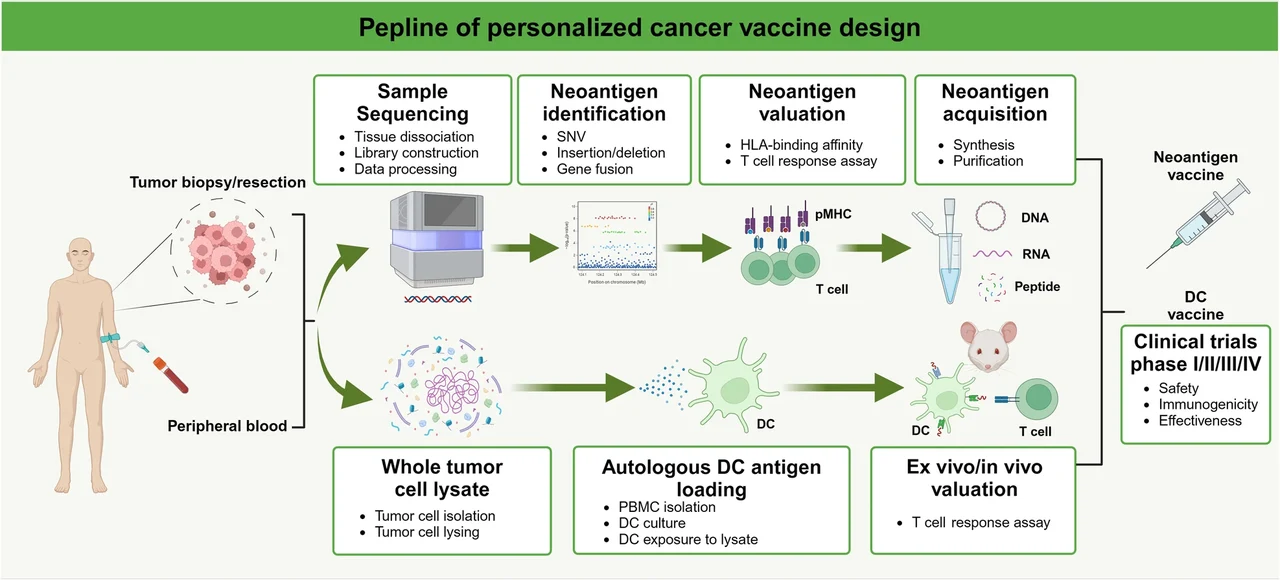
Banner image: The process of cancer vaccine development by Beilei Liu, Hongyu Zhou, Licheng Tan, CC BY 4.0, via Wikimedia Commons.
The data behind this story
Topics: Oncology · Biologics and biosimilars
Go deeper