Creatine used to be a gym-only supplement. Today it is sold to older adults, women and people who never lift weights. It is also one of the most researched supplements there is.
What creatine is
Creatine is made by the body and found in meat and fish. Muscles use it to make energy for short, intense effort. Vegetarians often get little from food. Most supplements use creatine monohydrate, the form with the most research [1].
What the evidence shows
The International Society of Sports Nutrition reviewed the research in its 2017 position stand [1]. It concluded that creatine monohydrate is the most effective supplement for increasing high-intensity exercise capacity and lean body mass during training.
- Performance: better results in short, repeated bursts of effort [1].
- Recovery and training: may support recovery and help athletes handle heavy training [1].
- Ageing: studied, with exercise, for muscle and strength in older adults [1][3].
Research into brain health, depression and other clinical uses is still early. These are promising leads, not proven benefits.
Is it safe?
The ISSN position stand found short- and long-term use safe and well tolerated in healthy people, including studies of up to 30 g a day for five years [1]. A 2025 analysis of clinical trials and adverse event reports supports this [2]. Common maintenance doses are about 3–5 g a day [1]. People with kidney disease, or who take medicines that affect the kidneys, should ask a doctor first.
Go deeper
Want the full picture? Our report covers market size, growth, segments, countries and the key companies. Read the report or get a free sample.
How creatine is usually taken
The ISSN describes two common ways [1]:
- Loading: about 0.3 g per kg of body weight a day for 5–7 days, then 3–5 g a day.
- No loading: 3–5 g a day. Muscle stores rise more slowly, over about a month.
Creatine monohydrate is the form with the most research [1][3]. Newer forms cost more but have not been shown to work better [3].
Beyond the gym
Researchers are studying creatine in older adults, for muscle and strength, and in some medical conditions [1]. Older people lose muscle with age, a condition called sarcopenia [4]. Creatine combined with strength training is one area of interest. Results so far are promising but not final.
Muscle and falls
Weak muscles raise the risk of falls. Falls killed about 842,000 people in 2023, and 71% were aged 60 or over [5]. Balance and strength exercise cut fall rates by about 23% in trials [5]. Any supplement is at most an extra on top of this exercise.
Quality and safety
The ISSN found no good evidence of harm from creatine in healthy people taking recommended doses [1]. A review of trials and adverse event reports looked at how often side effects were reported [2]. Still, quality varies. The NCCIH warns that some products sold for bodybuilding contain hidden drugs [6]. Buyers should choose plain creatine monohydrate with independent testing.
Key numbers at a glance
- Usual dose: 3–5 g a day.
- Optional loading: about 0.3 g/kg a day for 5–7 days.
- Falls killed about 842,000 people in 2023.
Questions to ask your health worker
- Is creatine safe with my kidney function?
- Should I take it with my current medicines?
- Will it affect my weight on the scale?
- Which product brands are independently tested?
Where to read more
All figures in this article come from public sources listed below. For more detail, start with the ISSN position stand on creatine and the 2022 Nutrients review of creatine safety and regulation. Each is free to read online.
Common myths
- Myth: Creatine is a steroid. Fact: It is not. It is a compound the body makes and that is found in meat and fish [1].
- Myth: Creatine harms healthy kidneys. Fact: The ISSN found no good evidence of harm at recommended doses in healthy people [1].
- Myth: You must load to get results. Fact: Taking 3–5 g a day without loading works too, just more slowly [1].
- Myth: Newer forms work better. Fact: Creatine monohydrate is still the best-studied form [3].
Reading the label
- Look for "creatine monohydrate" as the only ingredient.
- Check the dose per scoop, usually 3–5 g.
- Prefer products with independent testing for purity.
- Avoid blends with stimulants or long ingredient lists.
Who should check first
- People with kidney disease or reduced kidney function.
- People taking medicines that affect the kidneys.
- Pregnant or breastfeeding women, since there is less research.
- Teenagers, who should focus on diet and training first.
Creatine can raise body weight a little at first, mostly from water stored in muscle [1]. Blood tests for kidney function can show a slightly higher creatinine level in people taking creatine. Doctors should be told, so the result is read correctly.
Vegetarians and vegans
Creatine is found mainly in meat and fish [1]. People who eat little or none of these foods tend to have lower muscle creatine stores. Some studies suggest they may notice a larger effect from supplements. Vegan-friendly creatine monohydrate is widely sold, because it is usually made in a lab, not from animals.
What this means
Few supplements have this much evidence behind them. For buyers, quality matters: look for third-party testing. For brands, the move from gym users to women and older adults is the main growth story.
Explore on Acuitas
- Creatine market report – size, growth and key players
- Creatine statistics – key numbers, trials and research in one place
- Top 10 fastest-growing OTC & Nutraceuticals markets
- Global Adaptogens Market Analysis – related market
- Global Amino Acid Market Analysis – related market
- Global Antioxidants Market Analysis – related market
- Not active enough (adults) – free chart in the Public Health Dashboard
- Stunting in children under 5 – free chart in the Public Health Dashboard
- Get a free sample report or talk to our team
Sources
- Kreider RB et al. ISSN position stand: safety and efficacy of creatine supplementation. J Int Soc Sports Nutr, 2017;14:18
- Safety of creatine supplementation: prevalence of reported side effects in clinical trials and adverse event reports (2025)
- Kreider RB et al. Bioavailability, efficacy, safety and regulatory status of creatine and related compounds: a critical review. Nutrients, 2022
- WHO fact sheet: Musculoskeletal health
- WHO fact sheet: Falls
- NCCIH: Using dietary supplements wisely
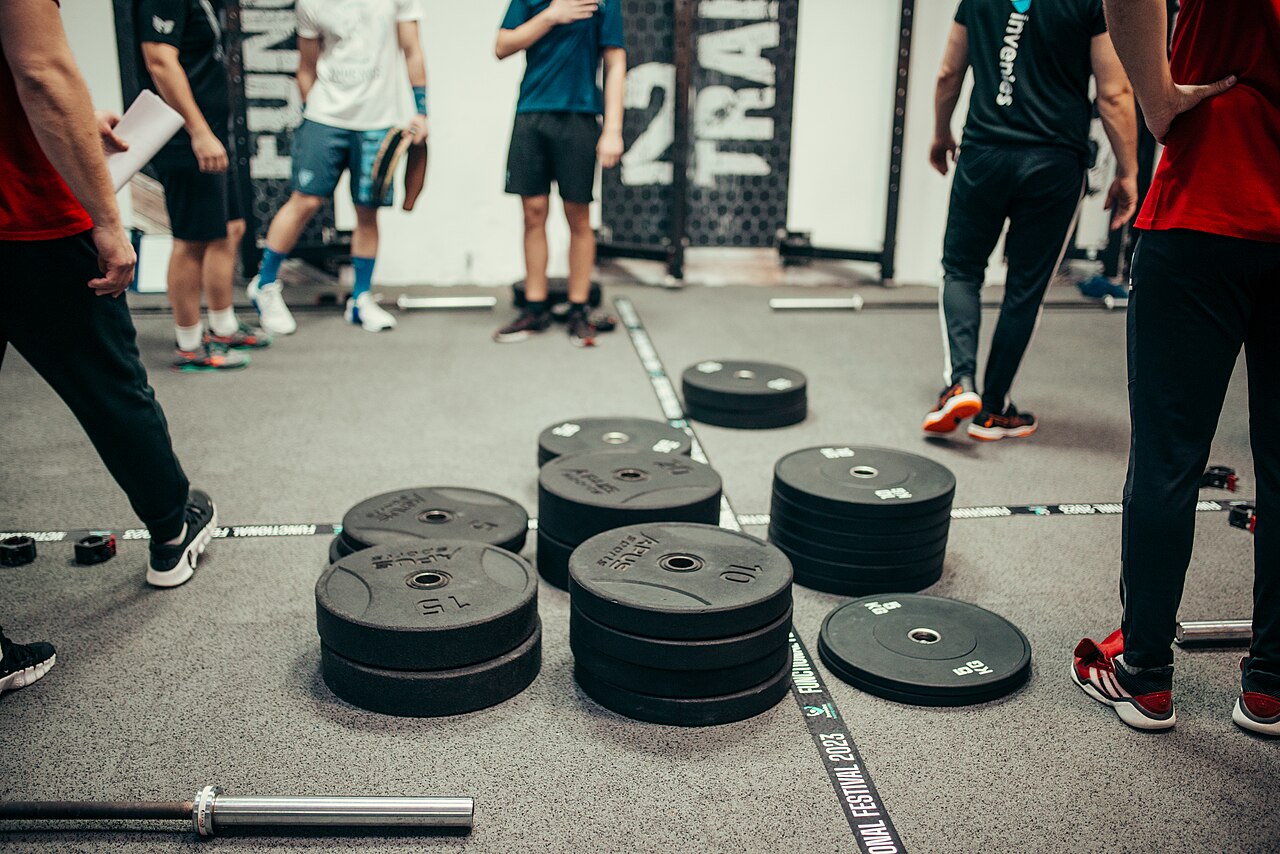
Banner image: Several athletes and coaches gather in a gym for a weightlifting competition by Shixart1985, CC BY 2.0, via Wikimedia Commons.
The data behind this story
Go deeper