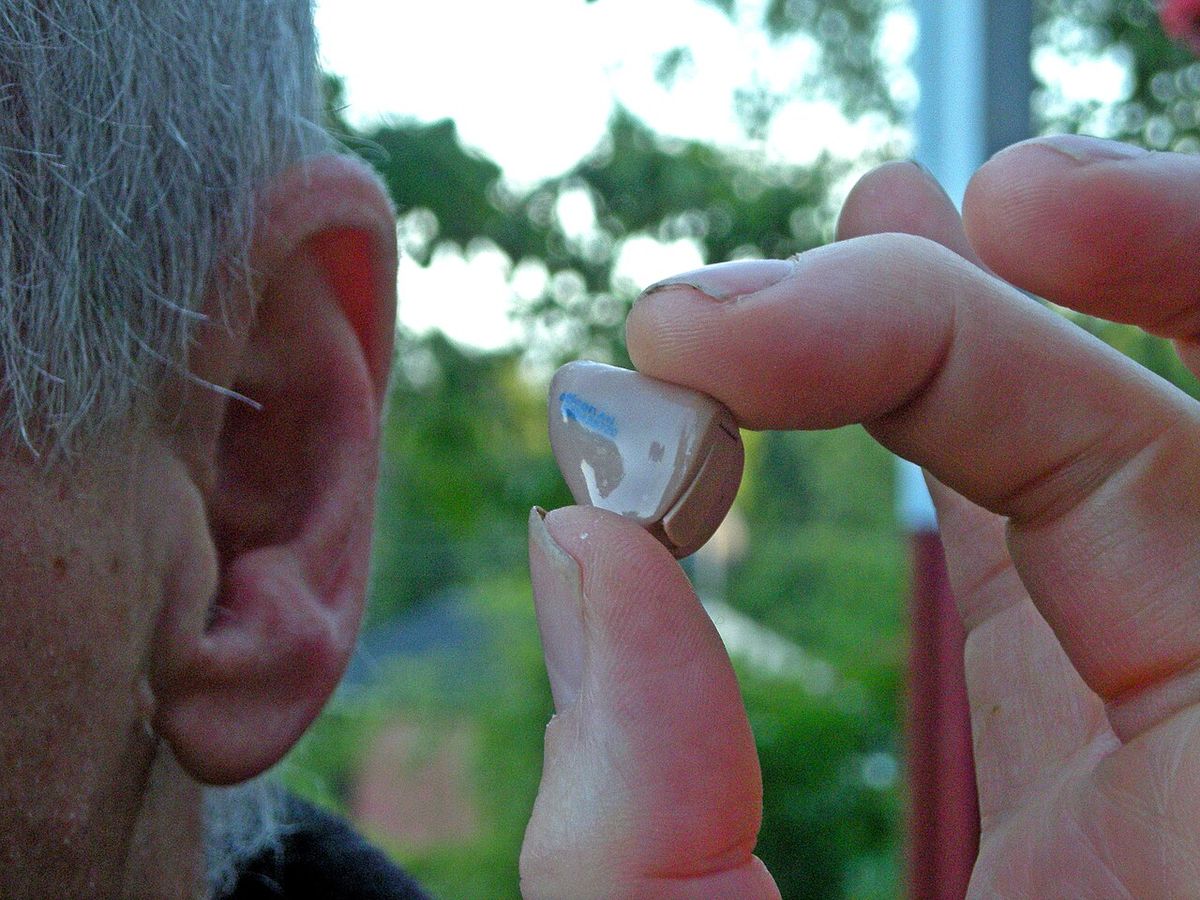
Hearing loss is one of the most common health conditions in the world, and one of the most under-treated. It affects how people learn, work and connect with others. In older adults it is linked to isolation. Yet a hearing test is quick, and many causes can be helped.
How many people are affected
WHO estimates that more than 1.5 billion people live with some degree of hearing loss today. By 2050 that could reach nearly 2.5 billion, about one in four people, and at least 700 million will need hearing rehabilitation [1][2].
Why so many go without help
- Cost: hearing aids and fitting are expensive in many countries.
- Too few specialists: many low- and middle-income countries have very few audiologists and ear doctors [1].
- Stigma: many people delay getting tested.
- No screening: hearing is often not checked in newborns, school children or older adults.
Devices are changing
Hearing aids have become smaller, rechargeable and connected to phones. In the United States, the FDA created a new class of over-the-counter hearing aids in August 2022. Adults with perceived mild to moderate hearing loss can now buy them without a prescription or fitting, from 17 October 2022 [3][4].
Other parts of the market include cochlear implants for severe loss, and diagnostic audiometers used in clinics and screening programmes.
Go deeper
Want the full picture? Our report covers market size, growth, segments, countries and the key companies. Read the report or get a free sample.
Today and 2050
WHO reports that over 430 million people, more than 5% of the world, need rehabilitation for disabling hearing loss, including 34 million children [1]. By 2050, this is expected to pass 700 million, or 1 in every 10 people [1].
Nearly 80% of people with disabling hearing loss live in low- and middle-income countries [1]. Among people over 60, more than 25% are affected [1]. About 95.1 million children aged 5–19 live with some hearing loss [1].
The cost of doing nothing
Unaddressed hearing loss costs the world almost US$1 trillion a year [1]. WHO says an extra investment of less than US$1.40 per person a year would scale up ear and hearing care worldwide [1]. Over 10 years, this would return nearly US$16 for every dollar spent [1].
Causes through life
- Before birth: genes and infections such as rubella [1].
- Around birth: lack of oxygen, severe jaundice, low birth weight [1].
- Childhood: chronic ear infections, fluid in the ear, meningitis [1].
- Adulthood and older age: chronic disease, smoking, age-related loss [1].
- Any age: ear wax, injury, loud noise and some medicines [1].
In children, nearly 60% of hearing loss is due to causes that can be prevented [1].
Loud sound
More than 1 billion young adults are at risk of permanent hearing loss from unsafe listening, such as loud music through earphones [1]. Keeping volume down, taking breaks and using ear protection at loud events helps.
Hearing and dementia
WHO lists a higher risk of dementia and faster mental decline as effects of unaddressed hearing loss [1]. Hearing aids are one of the steps WHO lists to lower dementia risk [5].
Key numbers at a glance
- 430 million people need hearing rehabilitation today.
- 700 million expected by 2050.
- Nearly US$1 trillion lost each year.
- Less than US$1.40 per person a year would scale up care.
- Return of nearly US$16 per dollar invested.
What the words mean
- Hearing loss: not hearing as well as someone with normal hearing, which is 20 dB or better in both ears [1].
- Disabling hearing loss: more than 35 dB loss in the better ear [1].
- Hard of hearing: mild to severe loss. People usually speak and can use hearing aids, cochlear implants and captions [1].
- Deaf: mostly profound loss, with very little or no hearing. Some use sign language. Many can benefit from cochlear implants [1].
Effects on daily life
Unaddressed hearing loss limits speech and communication, affects thinking, and can lead to loneliness and stigma [1]. It reduces access to education and jobs [1]. In children, it can delay language and learning. Early screening of newborns and school children finds problems when they are easiest to help.
Over-the-counter hearing aids
In 2022, the US created a new category of over-the-counter hearing aids for adults with mild to moderate hearing loss [3]. They can be bought without a prescription or a hearing test [4]. This aims to lower cost and widen access [4]. People with severe loss, or children, still need a full check by a hearing professional.
Prevention at every age
WHO says many causes of hearing loss can be avoided through public health action across life [1]. That includes vaccines against rubella and meningitis, good care at birth, treating ear infections early, safe use of medicines that can harm hearing, and limiting loud noise at work and play. Ear wax removal is a simple fix that is often overlooked.
Where to read more
All figures in this article come from public sources listed below. For more detail, start with the WHO fact sheet on deafness and hearing loss and the WHO World report on hearing. Each is free to read online.
Questions to ask your health worker
- What type and level of hearing loss do I have?
- Would an over-the-counter aid work for me?
- Do I need a cochlear implant check?
- How can I protect the hearing I have?
Writing these down before a visit helps make the most of a short appointment.
What this means
The need is huge and growing with ageing populations. Wider screening, lower-cost devices and tele-audiology can close the gap. For companies, simpler devices sold through pharmacies and online are the fastest-changing part of the market.
Explore on Acuitas
- Audiology Devices market report – size, growth and key players
- Audiology Devices statistics – key numbers, trials and research in one place
- Top 10 fastest-growing Medical Devices markets
- Global Anti-Aging Market Analysis – related market
- Global Assisted Walking Aids Market Analysis – related market
- Global Home Healthcare Market Analysis – related market
- People aged 65 and over – free chart in the Public Health Dashboard
- Get a free sample report or talk to our team
Sources
- WHO fact sheet: Deafness and hearing loss
- WHO, Mar 2021: 1 in 4 people projected to have hearing problems by 2050 (World report on hearing)
- US Federal Register, 17 Aug 2022: Establishing Over-the-Counter Hearing Aids (final rule, effective 17 Oct 2022)
- NIDCD (NIH): FDA's new category of hearing aids advances hearing health care
- WHO fact sheet: Dementia
Banner image: Hearing aid 20080620 by Jonas Bergsten, Public domain, via Wikimedia Commons.
The data behind this story
Go deeper