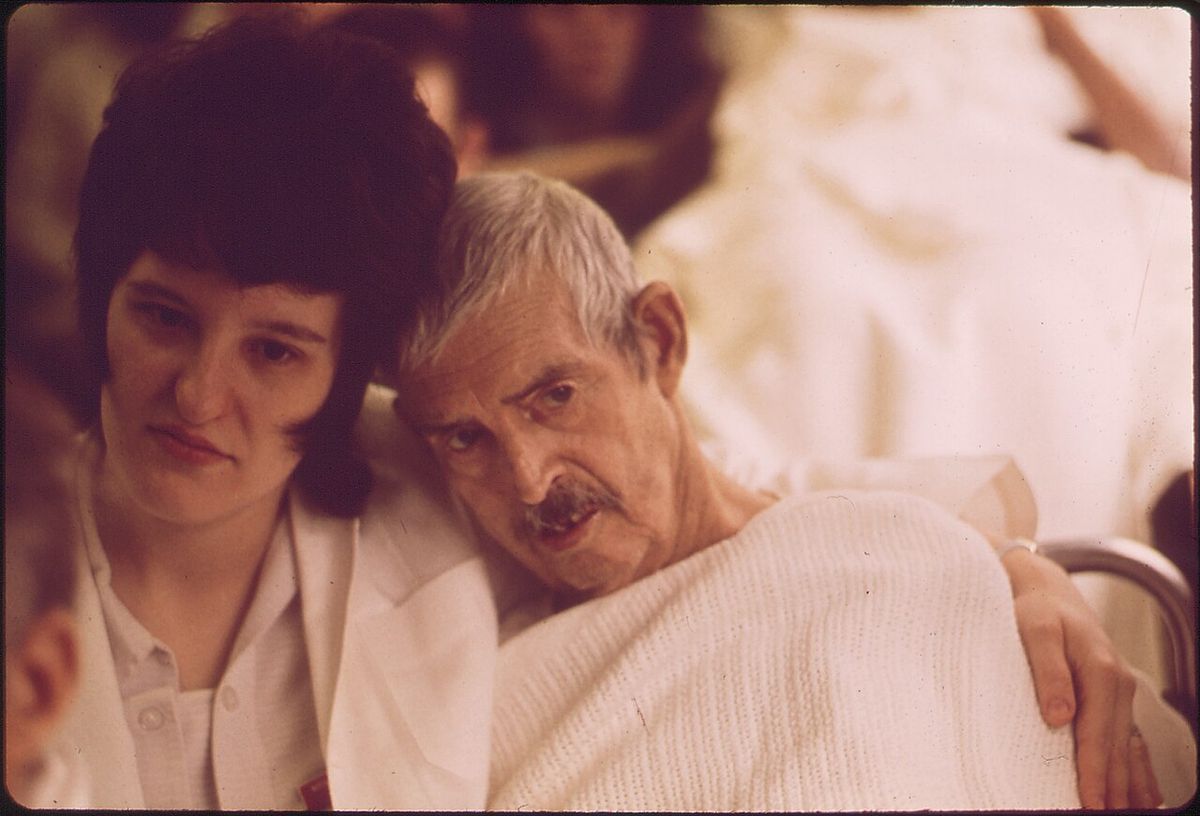
Home healthcare brings nurses, therapists, tests and monitoring to the patient's home. It covers recovery after surgery, long-term illness, palliative care and help for frail older people. Most people prefer to be cared for at home when it is safe.
The ageing driver
WHO projects that people aged 60 and over will double to 2.1 billion by 2050. People aged 80 and over will triple between 2020 and 2050 to 426 million [1]. By 2050, two-thirds of people over 60 will live in low- and middle-income countries [1].
Why care is moving home
- Several conditions at once: older people often live with hearing loss, arthritis, diabetes, COPD, depression or dementia together [1].
- Hospital pressure: shorter stays free beds for the sickest patients.
- Technology: remote monitoring, video visits and portable tests make home care safer.
- Patient choice: many people recover better in familiar surroundings.
Rehab and assistive products at home
WHO estimates 2.4 billion people could benefit from rehabilitation [2], and much of it can be done at home. The UN Decade of Healthy Ageing (2021–2030) calls for long-term care and person-centred primary care for older people [1].
Go deeper
Want the full picture? Our report covers market size, growth, segments, countries and the key companies. Read the report or get a free sample.
The conditions home care deals with
WHO lists common conditions in older age: hearing loss, cataracts, back and neck pain, osteoarthritis, COPD, diabetes, depression and dementia [1]. Older people often have several at once [1]. WHO also describes "geriatric syndromes" that home care teams see every day: frailty, incontinence, falls, delirium and pressure ulcers [1].
Falls at home
Falls caused about 842,000 deaths in 2023, and 71% were in people aged 60 and over [3]. Many happen at home. WHO found home hazard checks cut fall rates by 38% in people at high risk [3]. Home care visits are a natural time to spot loose rugs, poor lighting and unsafe stairs.
Dementia care at home
About 57 million people were living with dementia in 2021 [4]. Dementia cost economies US$1.3 trillion in 2019. About half of that cost was care given by family and friends, who give on average 5 hours of care a day [4]. Women give 70% of these care hours [4]. Home care services that support these carers help keep people at home longer.
Rehabilitation at home
WHO lists the home as one of the places where rehabilitation can be given [2]. Changing an older person's home to improve safety is one of WHO's own examples of rehabilitation [2]. Home rehab can shorten hospital stays and help prevent people coming back to hospital [2].
What makes home care safe
- Trained staff with clear links to doctors and hospitals.
- Care plans that cover medicines, nutrition, mobility and mood.
- Remote monitoring for people at higher risk, with someone watching the alerts.
- Support and breaks for family carers.
- Clear plans for emergencies.
Paying for it
The UN Decade of Healthy Ageing calls for access to quality long-term care for older people who need it [1]. How that care is paid for differs a lot by country. Some use public insurance, some rely on families, and many mix both. Clear funding rules decide whether home care grows as a public service or stays out of reach.
Healthy years, not just more years
WHO notes that the share of life spent in good health has stayed broadly the same. That suggests the extra years people now live are often in poor health [1]. If those years can be healthier, older people can keep doing the things they value [1]. Home care, rehabilitation and support to stay active all aim at this goal.
Where older people live matters
WHO says most differences in older people's health come from their homes, neighbourhoods and communities, and from factors like income [1]. Safe buildings and transport, and places that are easy to walk around, help people stay independent [1]. Home care teams often act as the link between the person, their family and these wider services.
Ageism and choice
WHO warns that older people are often wrongly assumed to be frail or a burden [1]. These attitudes can shape policy and limit choices [1]. There is no typical older person. Some 80-year-olds have the physical and mental abilities of many 30-year-olds. Others decline much earlier [1]. Good home care starts with what the person wants and can do, not with their age.
The four areas of the Decade of Healthy Ageing
- Changing how we think, feel and act about age and ageism.
- Building communities that support older people's abilities.
- Person-centred, joined-up care and primary health services.
- Access to quality long-term care for older people who need it.
The UN declared 2021–2030 the Decade of Healthy Ageing and asked WHO to lead it [1]. Home healthcare touches all four areas.
Key numbers at a glance
- People aged 60+ will reach 1.4 billion by 2030 and 2.1 billion by 2050.
- People aged 80+ will reach 426 million by 2050.
- Falls caused about 842,000 deaths in 2023.
- 57 million people lived with dementia in 2021.
- About 2.4 billion people could benefit from rehabilitation.
Each of these groups needs care that often works best at home, with good links to clinics and hospitals.
What this means
Home care is becoming a core part of health systems, not an add-on. Trained home-care workers, good links to hospitals and safe use of remote monitoring will decide how well it works.
Explore on Acuitas
- Home Healthcare market report – size, growth and key players
- Home Healthcare statistics – key numbers, trials and research in one place
- Top 10 fastest-growing Digital Health markets
- Global Anti-Aging Market Analysis – related market
- Global Arrhythmia Monitoring Devices Market Analysis – related market
- Global Artificial Intelligence (AI) in Remote Patient Monitoring Market Analysis – related market
- People aged 65 and over – free chart in the Public Health Dashboard
- Get a free sample report or talk to our team
Topics: Home and long-term care · Geriatric · Remote monitoring and wearables
Sources
- WHO fact sheet: Ageing and health
- WHO fact sheet: Rehabilitation
- WHO fact sheet: Falls
- WHO fact sheet: Dementia
Banner image: A NURSE HELPS AN ELDERLY PATIENT LEAVE LOUISVILLE MEMORIAL HOSPITAL. A LIQUID CHLORINE BA… by Bill Strode, Public domain, via Wikimedia Commons.
The data behind this story
Topics: Home and long-term care · Geriatric · Remote monitoring and wearables
Go deeper