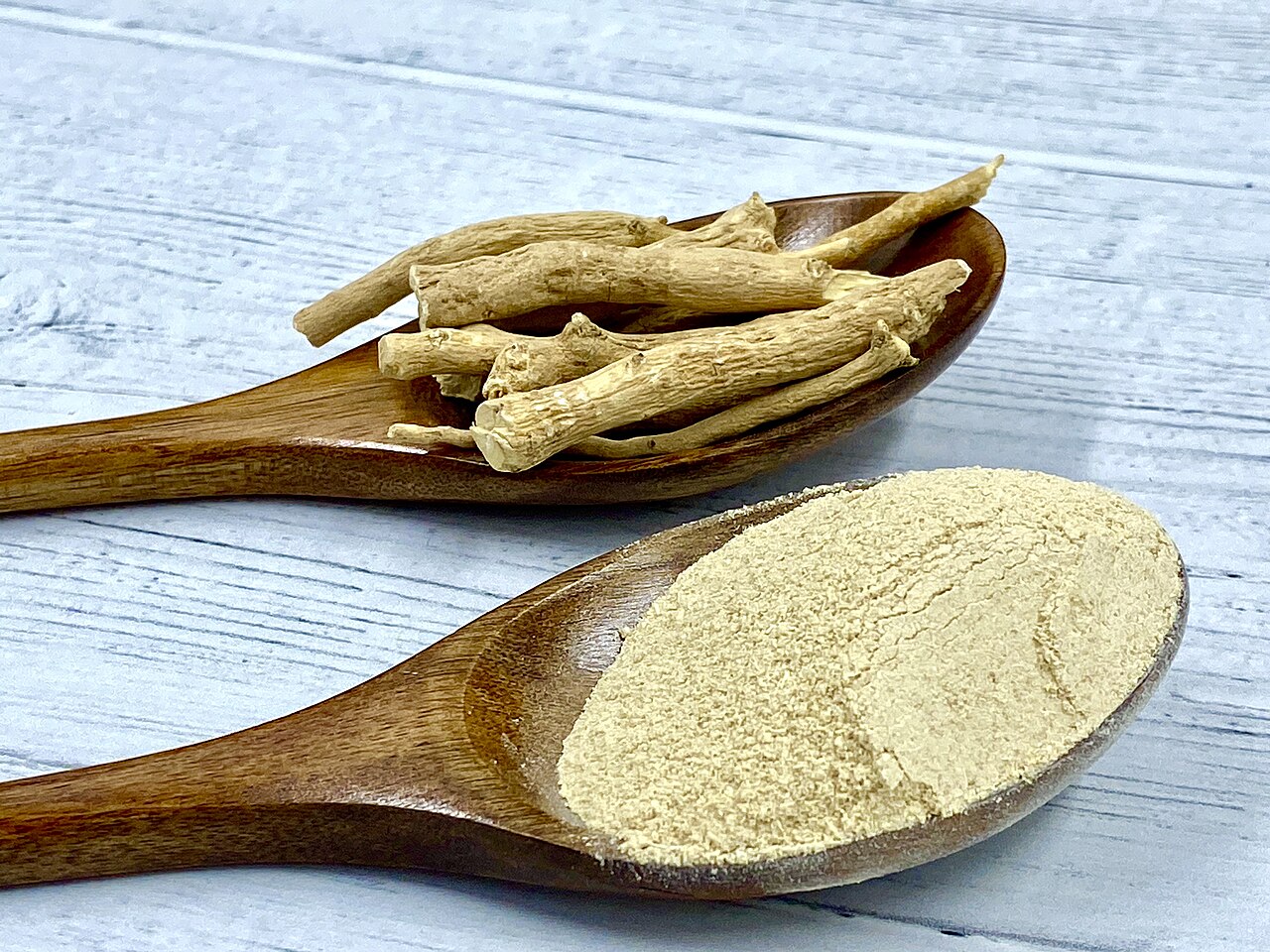
Adaptogens are herbs and mushrooms said to help the body cope with stress. The idea comes from traditional systems such as Ayurveda and Chinese medicine, and from Soviet research in the mid-20th century. Today, adaptogens are added to capsules, teas, coffees, gummies and even soft drinks, sold for stress, energy, focus and sleep.
Traditional medicine goes global
WHO says 170 of its Member States report the use of traditional medicine, and their top request to WHO is for evidence and data to guide safe use [1]. In 2022, WHO set up its Global Traditional Medicine Centre in Jamnagar, India, to build that evidence base [1].
The main adaptogens
- Ashwagandha: an Ayurvedic root sold for stress and sleep.
- Rhodiola: a plant from cold mountain regions, sold for fatigue and stress.
- Asian ginseng: used for energy and wellbeing in East Asian medicine.
- Holy basil (tulsi): an Ayurvedic herb used in teas.
- Medicinal mushrooms: such as reishi and cordyceps.
- Schisandra and eleuthero: used in Chinese and Russian traditions.
What the evidence says
Ashwagandha. NCCIH says some small studies suggest ashwagandha may help with stress and sleep, but most studies were small and short [2]. Rare cases of liver injury have been reported, and it may affect thyroid hormone levels. It should be avoided in pregnancy [2].
Rhodiola. NCCIH says there is not enough good research to show rhodiola helps with fatigue, stress or other conditions [3]. A 2012 systematic review found some hints of benefit for physical performance and mental fatigue, but flaws in the studies limited firm conclusions [6]. Rhodiola is possibly safe for up to 12 weeks; side effects include dizziness, headache and trouble sleeping [3].
Asian ginseng. NCCIH reports that a 2023 review of 19 studies with 2,413 participants suggested ginseng alone may have a small benefit for general fatigue [4]. Ginseng can interact with some medicines, including those for diabetes and blood thinners [4].
Regulators take a closer look
In 2023, Denmark banned ashwagandha supplements after a risk assessment by the Technical University of Denmark raised concerns about effects on thyroid and sex hormones and on pregnancy [5]. Researchers and industry groups have disputed the evidence behind the ban [5]. The case shows how herbs with long traditional use can still face tough questions under modern safety rules.
Quality problems
- The part of the plant used (root, leaf, whole plant) changes what is in the product.
- Extracts vary in strength from brand to brand.
- Herbal products can be contaminated with heavy metals, pesticides or other plants.
- Some products contain far less, or far more, of the herb than the label says.
Who should be careful
- Pregnant or breastfeeding women.
- People with thyroid, liver or autoimmune conditions.
- People taking sedatives, diabetes medicines, blood thinners or antidepressants.
- Anyone due for surgery.
Stress basics still come first
No herb replaces regular sleep, physical activity, time outdoors and social support. For ongoing stress, anxiety or low mood, talking therapies and medical care have much stronger evidence than any supplement.
Key numbers at a glance
- 170 WHO Member States report traditional medicine use.
- Ginseng review: 19 studies, 2,413 participants, small benefit for general fatigue.
- Denmark banned ashwagandha supplements in 2023.
Reading the label
- Check the exact ingredient and dose, not just the brand name.
- Look for an independent quality seal, such as USP or NSF.
- Be wary of words like "clinically proven" without a named study.
- Check for a batch number and expiry date.
- Avoid "proprietary blends" that hide how much of each ingredient is inside.
Go deeper
Want the full picture? Our report covers market size, growth, segments, countries and the key companies. Read the report or get a free sample.
Common myths
- "Ancient use proves it works." Long use shows tradition, not proof of benefit or safety.
- "Adaptogens have no side effects." Liver injury, hormone effects and drug interactions have been reported [2][3][4].
- "All ashwagandha products are the same." Root and leaf extracts, and different strengths, can behave very differently.
In short
Adaptogens may help some people a little, but evidence is limited. Check with a doctor, choose tested brands and stop if side effects appear.
Questions to ask before trying an adaptogen
- Which part of the plant is used, and at what dose?
- Could it interact with my medicines or a health condition?
- Is the product tested by an independent lab?
- How long should I try it, and when should I stop?
What this means
Adaptogens are moving from traditional medicine into mainstream shops. The evidence is still early and mixed, and safety questions remain. Buyers should choose tested products, check for interactions and treat bold claims with care.
Where to read more
All figures in this article come from public sources listed below. For more detail, start with the NCCIH pages on ashwagandha, rhodiola and Asian ginseng. Each is free to read online. If anything here raises a question about your own health, take this article to your doctor or pharmacist and talk it through together. Buyers, investors and policy makers can also use these sources to check claims in sales materials and compare options on the same public evidence. Where public sources disagree or update their figures, we note the year of each number so readers can see how the picture changes over time.
Explore on Acuitas
- Adaptogens market report – size, growth and key players
- Adaptogens statistics – key numbers, trials and research in one place
- Top 10 fastest-growing OTC & Nutraceuticals markets
- Global Amino Acid Market Analysis – related market
- Global Anti-Depressants Drugs Market Analysis – related market
- Global Anti-Snoring Devices Market Analysis – related market
- Stunting in children under 5 – free chart in the Public Health Dashboard
- Wasting in children under 5 – free chart in the Public Health Dashboard
- Get a free sample report or talk to our team
Topics: Nutrition · Mental health · Sleep
Sources
- WHO Global Traditional Medicine Centre: About us
- NCCIH: Ashwagandha
- NCCIH: Rhodiola, usefulness and safety
- NCCIH: Asian ginseng, usefulness and safety
- Danish ban on ashwagandha: truth, evidence, ethics, and regulations (Journal of Ayurveda and Integrative Medicine, 2024)
- Ishaque S et al. Rhodiola rosea for physical and mental fatigue: a systematic review (BMC Complementary and Alternative Medicine, 2012)
Banner image: Ashwagandha Powder and Root on Spoons - 50191697031 by formulatehealth, CC BY 2.0, via Wikimedia Commons.
The data behind this story
Topics: Nutrition · Mental health · Sleep
Go deeper